

In the tide of modern industrial production, automated equipment is gradually replacing traditional manual operations and has become a core force in improving production efficiency and ensuring operational accuracy. Among them, palletizing robots, as key equipment in the logistics and packaging link, have been widely used in food, chemical, pharmaceutical, warehousing and other industries by virtue of their advantages of high efficiency, stability and flexibility, completely changing the situation of traditional palletizing operations which are time-consuming, labor-intensive and inefficient.
Simply put, a palletizing robot is an automated device that can automatically complete the processes of grabbing, handling and stacking goods onto designated pallets or shelves in accordance with preset programs or instructions. Its development process is closely linked to the progress of industrial automation technology. In the early days, palletizing operations mainly relied on manual work, which not only required a large number of labor forces, but also had problems such as high labor intensity, low operation efficiency and poor stacking accuracy. Especially in the scenarios of heavy goods or mass production, the limitations of manual palletizing were more prominent. With the rise of mechanical automation technology, the first-generation mechanical palletizers came into being. Although they realized partial automated operations, they had poor flexibility and high adjustment difficulty, making it difficult to meet the production needs of multi-variety and small-batch. It was not until the maturity of industrial robot technology that palletizing robots with multi-degree-of-freedom and high-precision control truly achieved a breakthrough. They can flexibly adjust the operation mode according to the shape, size and weight of different goods, and have become "capable assistants" in modern industrial production lines.
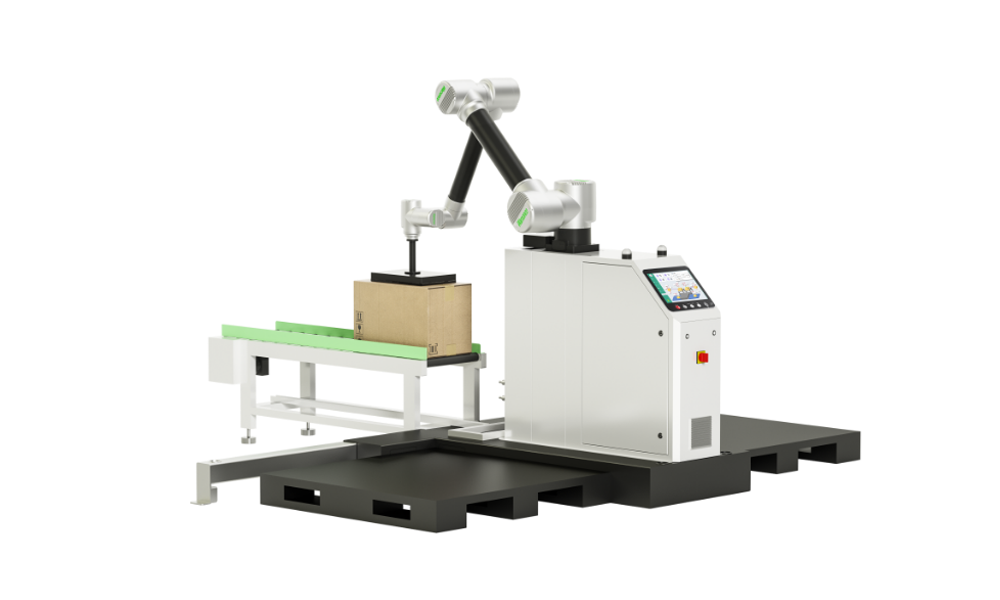
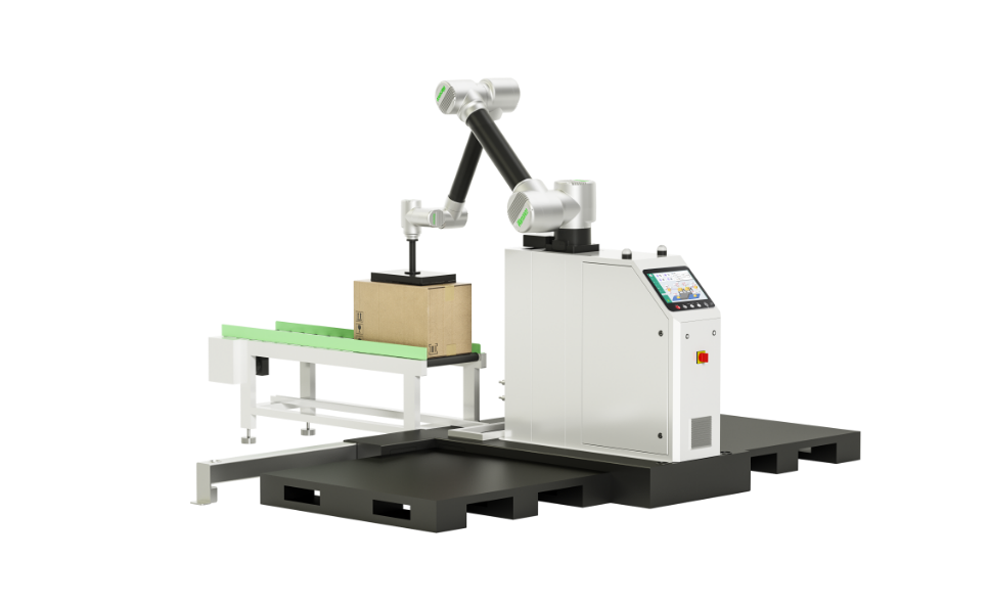
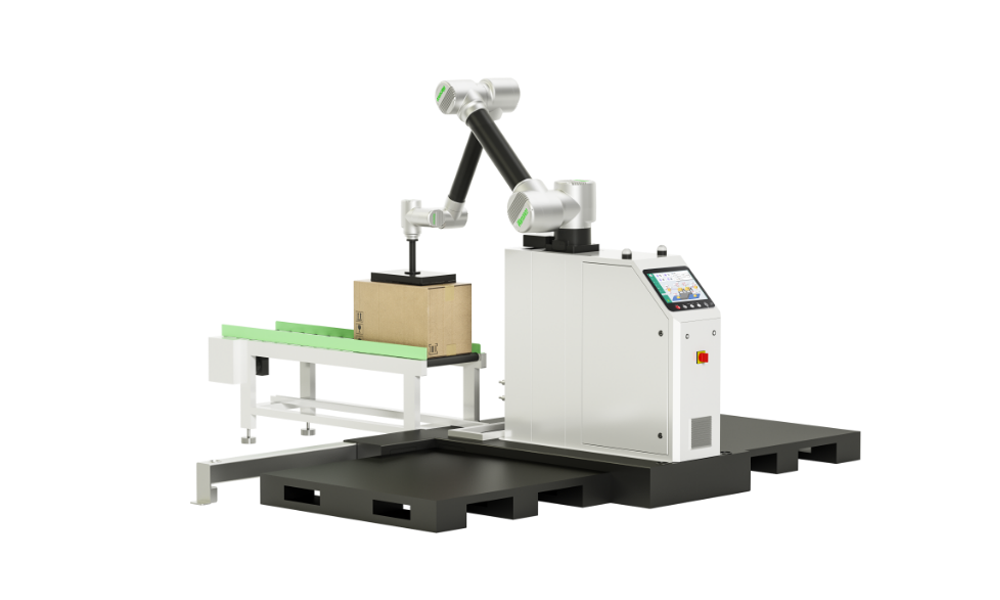
From the perspective of core structure, a palletizing robot is mainly composed of four parts: executive mechanism, drive system, control system and sensing system. The executive mechanism is like the "arm" of the robot, which usually includes a base, a waist, a large arm, a small arm and an end effector (gripper). The executive mechanisms with different structures determine the operation range and load capacity of the robot. For example, Cartesian coordinate palletizing robots are suitable for reciprocating operations on linear tracks and have strong load capacity; articulated palletizing robots, on the other hand, have a multi-joint structure, which is more flexible and can adapt to complex stacking trajectories. The drive system is equivalent to the "power source" of the robot, which is divided into three types: hydraulic drive, pneumatic drive and electric drive. Among them, electric drive has become the mainstream drive method due to its advantages of fast response speed, high control precision and low noise, and is widely used especially in the pharmaceutical and electronic industries that have high requirements for operation accuracy. The control system is the "brain" of the palletizing robot, which is responsible for receiving and processing operation instructions and controlling the coordinated work of various mechanisms. Nowadays, with the integration of the Internet of Things and artificial intelligence technology, the control system has realized seamless connection with the production management system. It can obtain production data in real time, dynamically adjust operation parameters, and even predict equipment failures through big data analysis, which greatly improves the intelligence level of the equipment. The sensing system is like the "eyes" and "touch" of the robot. Through devices such as visual sensors and pressure sensors, it can detect the position, posture and weight of goods in real time to ensure the accuracy and safety of the grabbing and stacking processes. For instance, visual sensors can identify the barcodes or QR codes of goods, automatically distinguish goods of different varieties, and realize classified palletizing; pressure sensors can sense the contact force between the gripper and the goods, so as to avoid damaging the goods due to excessive force or causing the goods to fall off due to insufficient force.
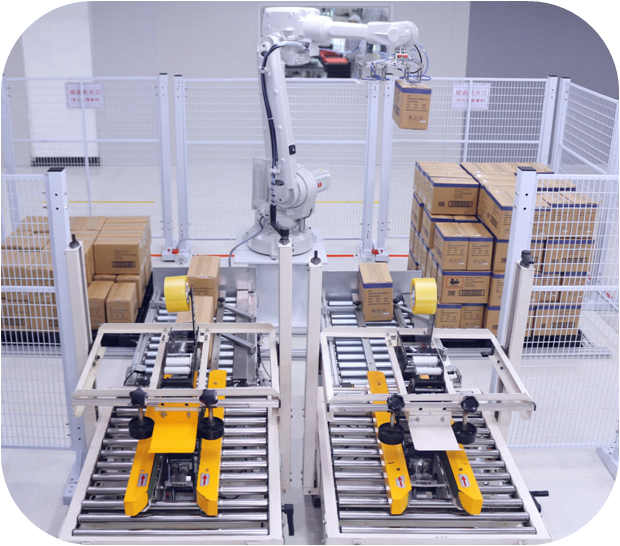
In terms of workflow, the operation process of a palletizing robot can be divided into four key steps, and each step reflects the characteristics of high efficiency and accuracy. The first step is the transportation and positioning of goods. When goods are transported to the designated area via a conveyor belt, the positioning sensor will accurately capture the position information of the goods and transmit the data to the control system, ensuring that the robot can find the grabbing point accurately. The second step is grabbing the goods. According to the type and size of the goods, the control system instructs the end effector to adjust the grabbing method - for bagged goods (such as flour and chemical fertilizers), a claw-type gripper is usually used to fix the goods through clamping force; for boxed goods (such as beverages and electronic products), a suction cup-type gripper is mostly used to grab the goods by using the principle of vacuum adsorption; for goods with irregular shapes, customized grippers can also be equipped to ensure the stability of grabbing. The third step is handling and stacking. The robot smoothly transports the goods to the top of the pallet in accordance with the preset stacking path, and then stacks the goods neatly on the pallet according to the stacking process requirements (such as staggered arrangement during multi-layer stacking and accurate control of the number of goods in each layer). During the stacking process, the sensing system will monitor the stacking accuracy of the goods in real time. If a deviation is found, the control system will immediately adjust the robot's movements to ensure that the goods in each layer are arranged neatly and prevent the goods from collapsing due to skewed stacking. The fourth step is the transportation and replacement of pallets. When the palletizing of one pallet is completed, the conveyor belt will transport the fully loaded pallet to the next link (such as the warehousing area and the loading area), and at the same time transport the empty pallet to the palletizing position. The robot then starts the next round of palletizing operations. The entire process requires no manual intervention, realizing continuous and unmanned production.
Compared with traditional manual palletizing and early mechanical palletizing equipment, palletizing robots have four significant advantages, which have also become the key reasons for their rapid popularization in the industrial field. The first is the advantage of efficiency. The efficiency of manual palletizing is usually 300-500 pieces per hour, while a high-performance palletizing robot can complete the palletizing of 1000-2000 pieces of goods per hour, which is a 2-4 times increase in efficiency. In large-scale production scenarios, such as large breweries and beverage factories, equipping a production line with 2-3 palletizing robots can meet the 24-hour palletizing demand throughout the day and significantly shorten the production cycle. The second is the advantage of accuracy. Manual palletizing is affected by factors such as the operator's experience and physical strength, so the stacking accuracy is difficult to guarantee. Problems such as irregular arrangement of goods and inconsistent number of layers are prone to occur, which not only affects the utilization rate of warehouse space, but also increases the risk of goods damage. However, the repeated positioning accuracy of a palletizing robot can reach ±0.1mm, and it can operate in strict accordance with the preset stacking plan to ensure that each piece of goods is placed accurately. The stacked pallets are neat and standardized, which not only saves warehouse space, but also reduces the damage rate of goods during storage and transportation. The third is the advantage of cost. Although the initial investment in palletizing robots is relatively high, from the perspective of long-term operation, their cost advantage is very obvious. One palletizing robot can replace 3-5 manual workers, which not only saves the continuous expenses such as labor wages, social security and welfare, but also avoids the additional costs caused by goods loss and equipment damage due to manual operation errors. At the same time, robots do not need to rest and can operate continuously. The equipment failure rate is low, and the maintenance cost is much lower than the manual management cost. Usually, the initial investment can be recovered within 1-2 years. The fourth is the advantage of safety. In the operation scenarios of heavy goods (such as chemical raw materials and metal components) or harsh environments (such as high temperature, low temperature, dust and toxic gases), manual palletizing has great potential safety hazards and is prone to work-related accidents. However, palletizing robots can operate independently in these dangerous environments without manual intervention, effectively ensuring the personal safety of operators. In addition, robots are also equipped with multiple safety protection devices, such as infrared sensing devices and emergency stop buttons. If a person or obstacle is detected entering the operation area, the robot will stop moving immediately, further improving the operation safety.
In terms of application scenarios, palletizing robots have been used in various industries, and their application scope is still continuously expanding with the continuous upgrading of technology. In the food industry, whether it is bagged rice and flour or boxed instant noodles and dairy products, palletizing robots can realize efficient and hygienic palletizing operations. Since the food industry has high requirements for hygiene standards, robots adopt stainless steel bodies and food-grade lubricants, which can effectively avoid the contamination of goods and reduce manual contact, thereby lowering the risk of food safety. In the chemical industry, palletizing robots are mainly used to handle corrosive or toxic goods such as chemical fertilizers, pesticides and plastic particles. Their sealed design and explosion-proof performance can prevent the leakage of harmful substances and ensure the health of operators and the safety of the production environment. In the pharmaceutical industry, relying on high precision and high stability, robots can complete the palletizing operations of precision goods such as medicine packaging boxes and infusion bottles. Moreover, they can record the palletizing information of each piece of goods through a traceability system, realizing the whole-process traceability of drug quality, which meets the strict quality management requirements of the pharmaceutical industry. In the warehousing and logistics industry, palletizing robots are used in conjunction with equipment such as automated stereoscopic warehouses and AGVs (Automated Guided Vehicles) to form a full-process automated system of "goods warehousing - automatic palletizing - intelligent storage - outbound handling", which greatly improves the utilization rate of warehouse space and the efficiency of goods turnover. Especially in the e-commerce logistics field, in the face of a large number of orders during peak shopping periods such as "Double 11" and "618", palletizing robots have become key equipment to ensure the smooth flow of logistics.
Looking forward to the future, with the continuous innovation of technology, palletizing robots will develop in a more intelligent, flexible and green direction. In terms of intelligence, robots will further integrate artificial intelligence technology, possess autonomous learning and independent decision-making capabilities. They can automatically optimize the grabbing and stacking plans according to the characteristics of different goods, and even adjust the operation strategies independently when facing unexpected situations (such as goods deviation and conveyor belt failure) without manual intervention. In terms of flexibility, modular design will become the mainstream. The end effectors and arm structures of robots can be quickly replaced according to production needs, realizing "one machine for multiple uses" and meeting the flexible production needs of multi-variety and small-batch. In terms of green development, robots will adopt more energy-saving drive systems and materials to reduce energy consumption and carbon emissions. At the same time, they will reduce invalid movements by optimizing the operation path to further improve energy utilization efficiency, which conforms to the requirements of industrial green development under the current "dual carbon" goal.
In conclusion, as an important part of industrial automation, palletizing robots are not only a "tool" to improve production efficiency and reduce operating costs, but also a key force to promote the transformation of industrial production towards intelligence, unmanned operation and green development. With the continuous maturity of their technology and the continuous expansion of application scenarios, palletizing robots will play a more important role in future industrial production and inject new impetus into the high-quality development of various industries.


 English