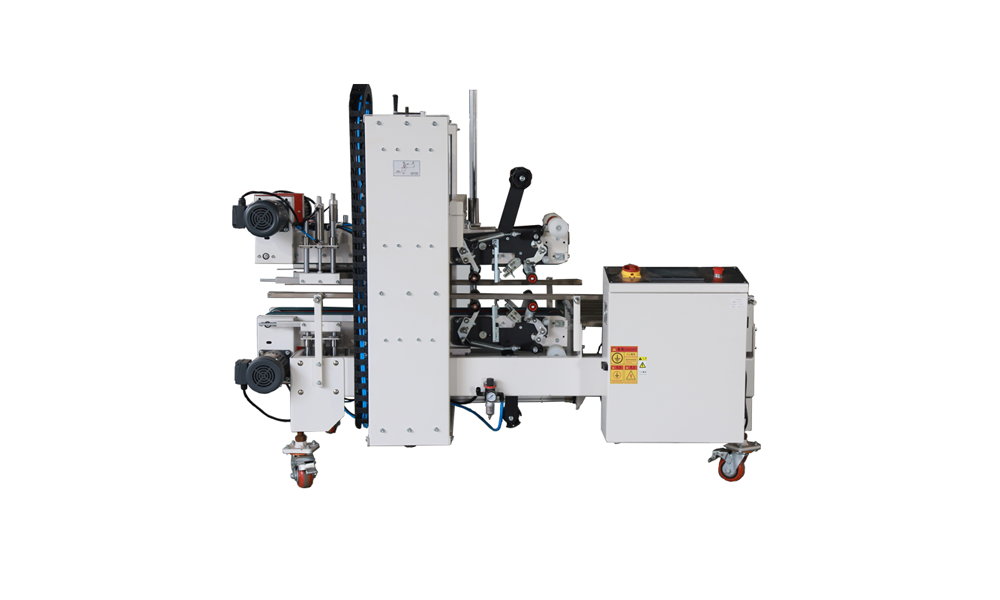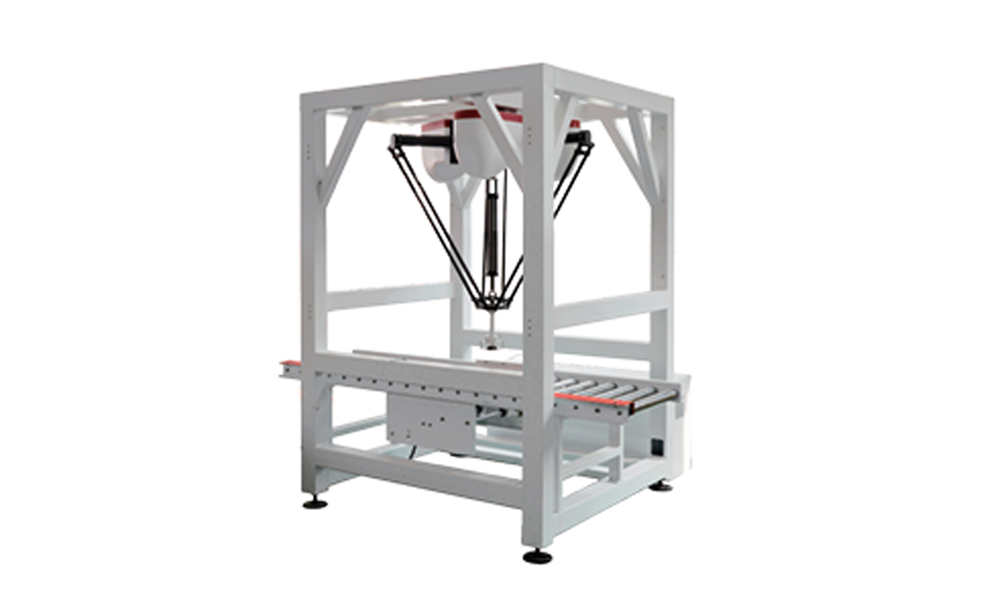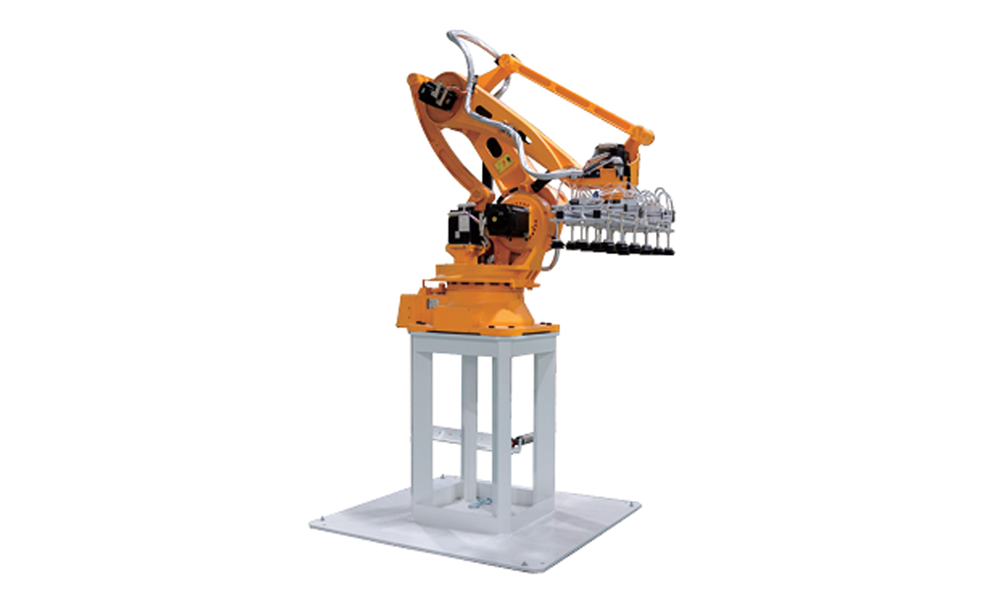


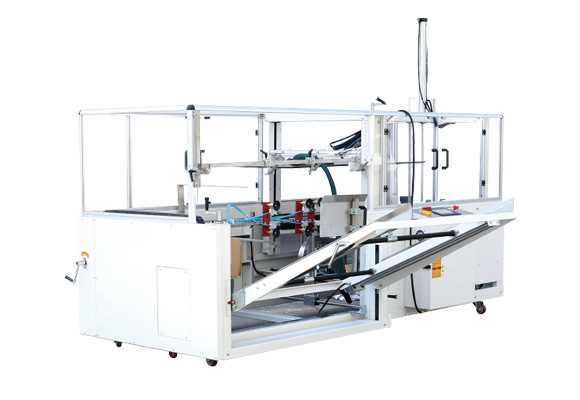
In the wave of automation in modern logistics and manufacturing industries, case erectors, as core equipment in packaging lines, have a direct impact on enterprises' production rhythms and cost control through their efficiency and stability. According to industry data statistics, production lines equipped with automated case erectors can reduce labor costs in the packaging process by 40%-60%, while increasing case erecting speed to 3-5 times that of manual operations. This article will provide comprehensive references for enterprises in purchasing and using case erectors from three dimensions—comparison of case erector types, analysis of core parameters, and practical performance evaluation—combined with specific data and tables.
Different types of case erectors vary significantly in structural design, automation level, and applicable carton specifications. Enterprises need to select suitable carton erector machine manufacturer based on their own production capacity requirements, carton sizes, and production line layouts. The following is a detailed comparison of mainstream case erector types in the current market:
Type | Automation Level | Applicable Carton Size (L × W × H) | Erecting Speed (cases/min) | Core Advantages | Application Scenarios |
Manual Case Erector | Semi-automatic (manual assistance required) | 150×100×80mm - 500×300×250mm | 5 - 10 | Low cost, small size, simple operation | Small enterprises, small-batch production, scenarios with frequent switching of multi-specification cartons |
Automatic Case Erector | Fully automatic (no manual intervention needed) | 200×120×100mm - 600×400×300mm | 15 - 30 | High efficiency, strong stability, reduced manual errors | Medium-sized enterprises, medium-capacity production lines, scenarios with relatively fixed carton specifications |
High-speed Case Erector | Fully automatic (high-speed adaptation) | 250×150×120mm - 700×500×400mm | 35 - 60 | Ultra-high-speed operation, support for continuous work | Large factories, high-capacity production lines (e.g., e-commerce warehouses, food and beverage industry) |
Folding & Sealing Integrated Machine | Fully automatic (integrated case erecting + sealing) | 180×110×90mm - 550×350×280mm | 12 - 25 | Integrated operation, saves production line space | Small and medium-sized production lines that need to complete both case erecting and sealing |
When purchasing a case erector, in addition to focusing on its type, the matching degree of core parameters is crucial to determining whether the equipment can meet production needs. The following is an analysis from the dimensions of speed, compatibility, stability, etc., combined with specific data:
2.1 Erecting Speed: Core Indicator for Production Capacity Matching
Erecting speed is usually measured in "cases per minute". The speed difference between different models directly corresponds to different production capacity requirements. It should be noted that the "maximum speed" marked on the equipment needs to be comprehensively judged based on the actual carton specifications and operating environment, and the actual operating speed is usually 80%-90% of the marked value.
Equipment Type | Marked Maximum Speed (cases/min) | Actual Operating Speed (cases/min) | Adaptable Daily Production Capacity (based on 8-hour operation) |
Manual Case Erector | 10 | 8 - 9 | 3,840 - 4,320 cases |
Automatic Case Erector | 30 | 24 - 27 | 11,520 - 12,960 cases |
High-speed Case Erector | 60 | 48 - 54 | 23,040 - 25,920 cases |
Folding & Sealing Integrated Machine | 25 | 20 - 22 | 9,600 - 10,560 cases |
2.2 Carton Compatibility: Key to Adapting to Multi-specification Production
Carton compatibility is mainly reflected in the range of carton length, width, and height that the equipment can adapt to, as well as whether it supports cartons of different materials (such as corrugated cartons, hard cardboard boxes). For enterprises that need to frequently switch carton specifications, choosing equipment with a "wide adjustable range" can reduce debugging time and improve efficiency.
Taking an automatic case erector of a certain brand as an example, its compatibility parameters are as follows:
Applicable carton material: 2-5 layer corrugated cartons
Carton length range: 200mm - 600mm (adjustable step: 10mm)
Carton width range: 120mm - 400mm (adjustable step: 5mm)
Carton height range: 100mm - 300mm (adjustable step: 5mm)
Minimum carton folding thickness: ≤5mm
2.3 Stability and Failure Rate: Important Guarantee for Reducing Downtime Costs
The stability of equipment is usually measured by "Mean Time Between Failures (MTBF)" and "failure rate". According to industry research, high-quality case erectors can achieve an MTBF of more than 5,000 hours and a failure rate of less than 1% per 1,000 hours; while low-end equipment has an MTBF of only 2,000-3,000 hours and a failure rate as high as 3%-5% per 1,000 hours.
The following is a comparison of stability data of case erectors in different price ranges:
Equipment Price Range | Mean Time Between Failures (MTBF) | Failure Rate (per 1,000 hours) | Annual Maintenance Cost (approx.) |
Low-end (10,000 - 30,000 RMB) | 2,000 - 3,000 hours | 3% - 5% | 3,000 - 5,000 RMB |
Mid-range (40,000 - 80,000 RMB) | 3,000 - 5,000 hours | 1% - 3% | 2,000 - 3,000 RMB |
High-end (90,000 - 150,000 RMB) | 5,000 - 8,000 hours | <1% | 1,000 - 2,000 RMB |
To further verify the actual performance of case erectors, we selected a high-speed case erector (Model: KX-600) of a brand with high market share for practical testing. The test scenario simulated the peak production demand of e-commerce warehouses (carton specification: 350×250×200mm corrugated carton, continuous operation for 4 hours).
3.1 Test Indicators and Results
Test Indicator | Test Target | Actual Result | Compliance Status |
Erecting Speed | ≥45 cases/min | 48.2 cases/min | Compliant |
Carton Forming Qualification Rate | ≥99.5% | 99.8% | Compliant |
Continuous Operation Stability | No shutdown failures | Only 1 slight carton jamming (automatic recovery within 10 seconds) | Basically Compliant |
Energy Consumption | ≤1.2kW/h | 1.05kW/h | Better than Target |
Noise | ≤75dB | 72.3dB | Better than Target |
3.2 Test Summary and Recommendations
This model of high-speed case erector performed excellently in the practical test. Its erecting speed, carton forming qualification rate, and energy consumption control all met or exceeded industry standards, making it suitable for high-capacity e-commerce warehouses, food processing, and other industries. However, there was 1 slight carton jamming during continuous operation. It is recommended that enterprises:
1.Regularly check the cleanliness of the carton conveying track to avoid dust or debris accumulation;
2.Provide equipment maintenance training for operators to help them master basic fault diagnosis skills;
3.Sign regular maintenance agreements with equipment suppliers to ensure long-term stable operation of the equipment.
Combined with the previous type comparison, parameter analysis, and practical evaluation, enterprises can follow the following steps when purchasing case erectors to achieve accurate matching between needs and equipment:
1.Clarify production capacity needs: Based on daily/monthly packaging production capacity, refer to the "Erecting Speed and Adaptable Production Capacity Correspondence Table" to initially determine the equipment type (manual/automatic/high-speed);
2.Confirm carton specifications: Count the range of length, width, and height of commonly used cartons, and select equipment whose compatibility covers all specifications;
3.Evaluate budget and costs: Comprehensively consider equipment purchase costs, maintenance costs, and labor savings benefits, and prioritize mid-range or high-end equipment with "high cost-effectiveness" (more cost-effective for long-term use);
4.Inspect supplier services: Choose suppliers with a complete after-sales service system to ensure timely response to equipment installation, commissioning, training, and maintenance.


 English