

The post-packaging line, as a core hub connecting "product manufacturing" and "market circulation" in the industrial production process, is a critical link for ensuring product quality and improving circulation efficiency. Its importance has become increasingly prominent with the advancement of intelligent manufacturing. At the end of production lines in industries such as food, pharmaceuticals, electronics, daily chemicals, and fast-moving consumer goods (FMCG), the post-packaging line acts as the "final gatekeeper." It undertakes the vital mission of transforming scattered and fragile semi-finished or finished products into qualified commodities that meet storage, transportation, and sales standards, directly influencing a product’s market competitiveness and an enterprise’s overall efficiency.
In terms of functional architecture, a modern post-packaging line is not a simple combination of individual equipment, but a highly integrated and coordinated automated system. Its core functions revolve around four objectives: "efficient packaging, precise protection, standardized labeling, and intelligent traceability," and it typically consists of five core modules to form a complete operational process. The first is the Product Sorting and Conveying Module, which serves as the "starting point" of the packaging line. This module uses high-precision conveyors, servo-motor-driven sorting mechanisms, or multi-axis robotic arms to neatly arrange and orient scattered products (such as bottled beverages, packaged snacks, and electronic components) randomly output from the production line. This ensures products enter the next stage in a uniform posture. For instance, in an instant noodle production line, robotic arms can accurately grasp freshly cooled noodle blocks and place them on the conveyor belt in accordance with the standard of "opening upward and uniform spacing," laying the foundation for subsequent bagging and edge sealing. In the electronics industry, anti-static conveyors prevent damage to chips and circuit boards caused by static electricity during the sorting process, ensuring stable product performance.
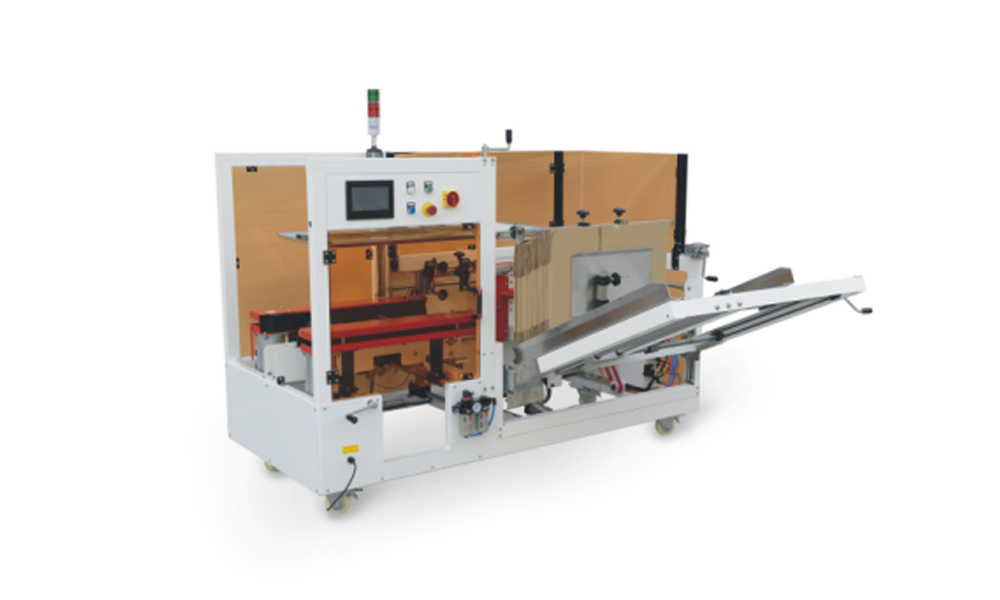
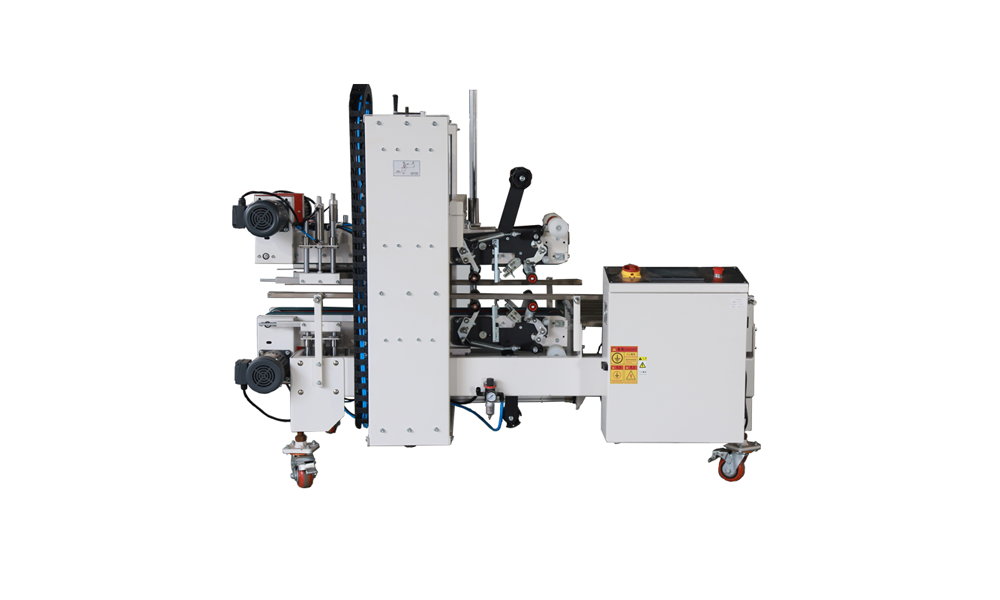
The second module is the Packaging Operation and Quality Inspection Module, the "core execution unit" of the packaging line. Based on product characteristics, packaging materials, and industry standards, this module adapts to different packaging processes. Common forms include carton sealing (accomplished by automatic flap-folding, tape sealing, or hot-melt adhesive sealing machines), bag heat sealing (using high-frequency heat sealers to seal plastic films and prevent moisture damage or deterioration of contents), bottle labeling (employing servo-motor-controlled labeling machines to achieve precise label positioning on bottle bodies with an error margin controlled within ±1mm), and box packaging (completing carton forming and sealing through integrated equipment for automatic box folding, bottom sealing, and lid fastening). Notably, to meet the requirements of high-precision industries, this module often integrates quality inspection functions: in the food industry, metal detectors can quickly identify metal impurities in products, while checkweighers reject products with unqualified weights (such as underfilled snack bags or missing seasoning packets); in the pharmaceutical industry, visual inspection systems automatically verify the clarity of text and QR codes on medicine bottle labels and check if caps are properly tightened, ensuring pharmaceutical packaging complies with GMP (Good Manufacturing Practice) standards and preventing drug contamination or failure due to packaging issues.
The third module is the Cartoning and Palletizing Module, a "critical step" in improving storage and transportation efficiency. After packaging, small packaged products (such as individual medicine boxes or single bottles of shampoo) need to be integrated into large packages or pallet units via this module to facilitate subsequent warehouse stacking and logistics transportation. In the automated cartoning process, Cartesian coordinate robots or multi-joint robotic arms place small packages into cartons or turnover boxes according to pre-programmed procedures, following the principle of "multi-layer staggering and center-of-gravity balance." For example, in the beverage industry, robots can complete 20-30 cartoning operations per minute, with beverages neatly arranged inside the cartons to avoid collision damage during transportation. In the palletizing process, automated palletizers stack cartons or trays filled with products onto pallets in a "multi-layer, stable, and compact" manner. Combined with stretch film wrapping machines for outer-layer fixation, standardized storage units are formed. Compared with manual palletizing, automated equipment not only increases efficiency by 4-6 times but also avoids stack collapse caused by improper manual operation, reducing cargo damage rates.
The fourth module is the Information Traceability and Labeling Module, the "data hub" for realizing full-life-cycle product management. In modern industrial production, "traceability" has become a mandatory requirement in industries such as food and pharmaceuticals, and the information traceability module of the post-packaging line undertakes this core function. Using high-speed inkjet printers (capable of printing over 300 characters per second) or laser markers, this module labels key information on product packaging, cartons, or pallets, including production date, batch number, shelf life, production workshop code, and QR codes/barcodes. Consumers can scan the QR code on the packaging to query the product’s production process, quality inspection report, and logistics trajectory; enterprises can use the traceability system to quickly locate problematic batches in case of quality issues, enabling precise recalls and reducing corporate losses. For example, each can of milk powder has a unique traceability code printed on its packaging. If quality risks are identified in a batch, enterprises can use the traceability system to quickly lock the scope of affected products, avoiding cost pressures and brand reputation damage caused by large-scale recalls.
The final module is the Central Control System Module, the "brain" of the post-packaging line. Based on a PLC (Programmable Logic Controller) or industrial computer, this module integrates operational data from equipment in all links (such as production speed, qualification rate, and equipment fault information) and displays the real-time operating status of the production line through a visual interface. Operators can adjust production parameters (such as packaging temperature, labeling position, and palletizing height) via the control system to achieve flexible production. For example, in a daily chemical factory, the same production line can quickly switch packaging processes for different products (such as shampoo, body wash, and laundry detergent) by adjusting control system parameters, without the need to replace large amounts of equipment, greatly improving the versatility and flexibility of the production line. Meanwhile, the control system features fault early warning and diagnosis functions: when an abnormality occurs in any equipment (such as conveyor jamming or insufficient ink in the inkjet printer), the system immediately issues an audio-visual alarm and displays the fault location and troubleshooting suggestions on the interface, reducing equipment downtime and ensuring continuous and stable operation of the production line.
Compared with traditional manual packaging, automated post-packaging lines offer triple advantages: "cost reduction, quality improvement, and efficiency enhancement." In terms of efficiency, the production speed of automated packaging lines can reach 3-5 times that of manual packaging. For example, in a biscuit production line, manual packaging can complete a maximum of 8-10 bags per minute, while automated lines can achieve 30-40 bags per minute, significantly increasing daily output. In terms of quality, the operational error of automated equipment is far lower than that of manual operations. For instance, the positioning error of labeling machines can be controlled within ±0.5mm, whereas manual labeling errors often exceed 5mm, effectively avoiding product returns caused by substandard packaging. In terms of cost, automated equipment can reduce labor demand by 60%-80% while lowering packaging material waste (e.g., the usage of tape and film can be precisely controlled to avoid manual waste). Taking a food packaging line with a daily output of 100,000 units as an example, the adoption of automated equipment can save approximately 500,000-800,000 yuan in annual labor costs and reduce packaging material waste by 15%-20%. Additionally, for industries with strict production environment requirements (such as food and pharmaceuticals), automated post-packaging lines can operate in a sterile and dust-free enclosed environment, avoiding contamination risks from human contact and meeting industry-specific standards.
With the in-depth advancement of Industry 4.0 and intelligent manufacturing, post-packaging lines are evolving toward "intelligence, flexibility, and greenization." In the future, packaging lines integrated with AI visual inspection technology will enable "full-dimensional quality inspection" of product packaging, identifying not only appearance defects but also verifying the integrity of products inside the packaging (such as missing parts or damage). Packaging lines equipped with IoT technology will seamlessly connect with enterprise ERP systems and logistics management systems, realizing data integration across "production-packaging-storage-logistics" and further improving supply chain efficiency. It can be said that post-packaging lines are no longer mere "packaging tools" but have become important engines for promoting the upgrading of enterprise production models and enhancing market competitiveness, playing an irreplaceable role in the modern industrial system.


 English