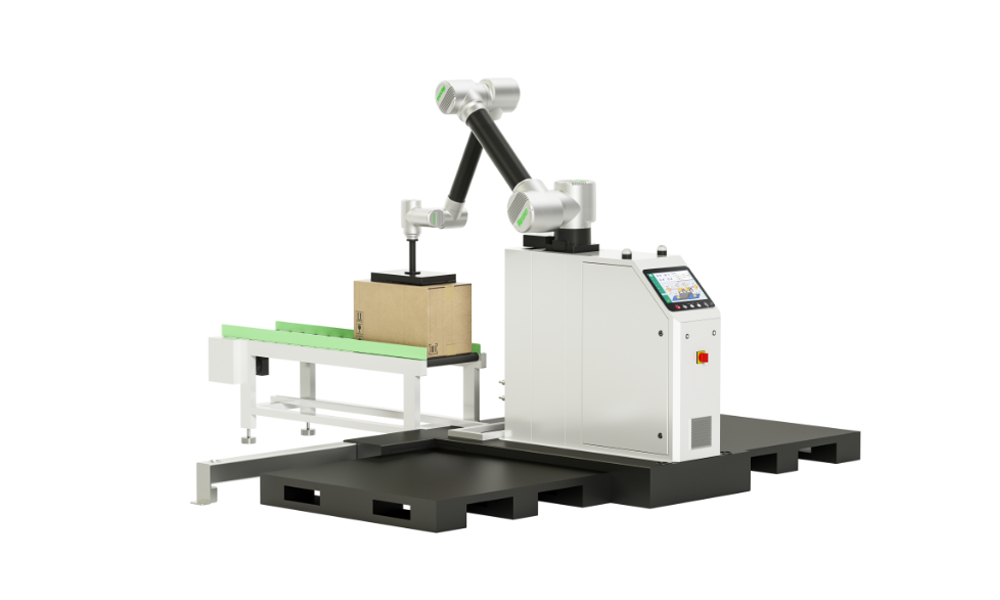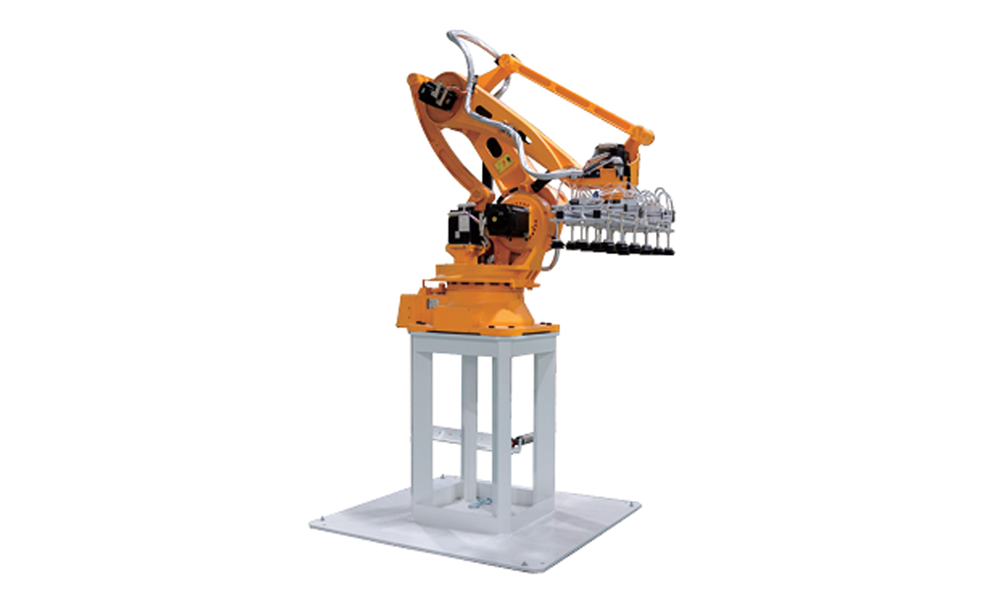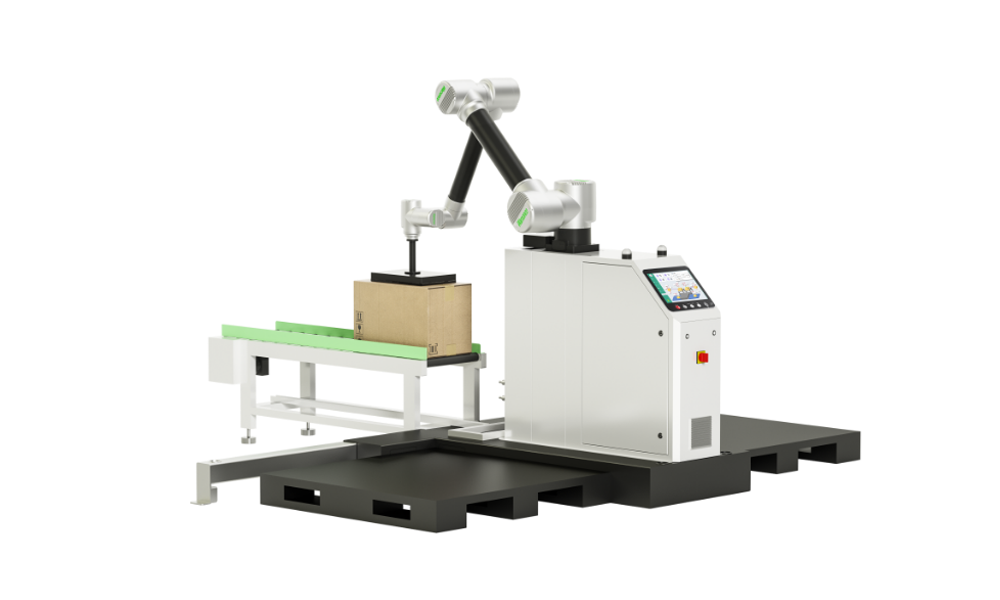


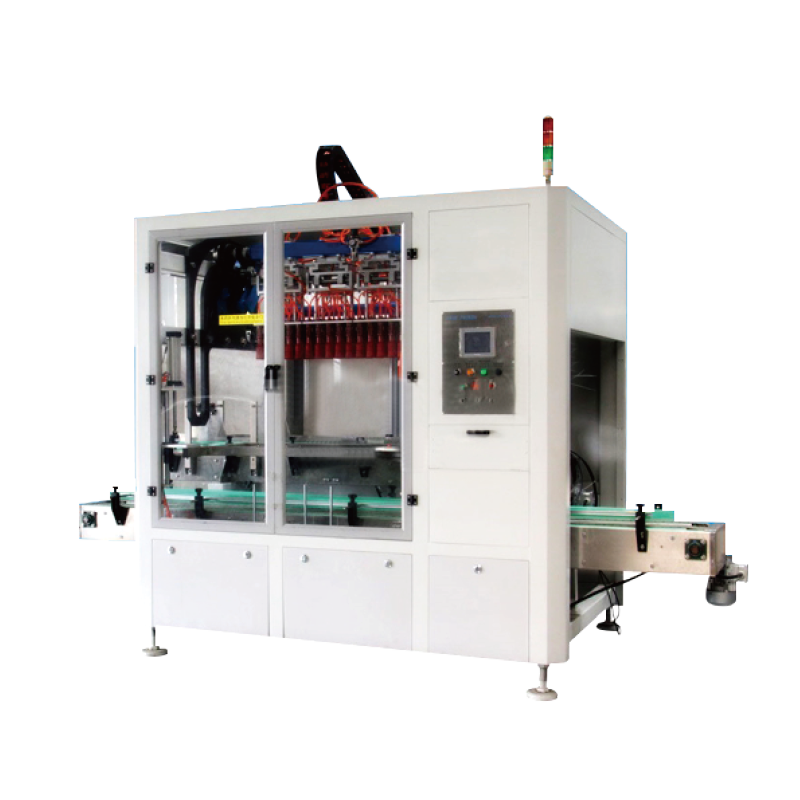
In the chain of modern manufacturing and logistics industries, carton packing machines, as core equipment connecting production and packaging links, their technological iteration and application expansion directly affect enterprises' production efficiency, cost control, and product competitiveness. From the early semi-automatic equipment relying on manual labor to the current fully automatic intelligent systems integrated with AI and IoT technologies, carton packing machines have become an important symbol of measuring the level of industrial automation. Meanwhile, they have demonstrated irreplaceable value in diverse fields such as food and beverage, pharmaceuticals, daily chemicals, and electronics
The technological development of carton packing machines has always centered on the three core goals of "efficiency improvement, precision control, and flexible adaptation". It has gone through three key stages: mechanical automation, electrical automation, and intelligent automation, forming a current technological system integrating multiple technologies.
Carton packing machines in this stage were centered on mechanical transmission. They realized simple grabbing, handling, and carton packing actions through mechanical structures such as cams, gears, and connecting rods. The typical representative was the "intermittent carton packing machine". The carton sealer machine equipment could only adapt to products and cartons of a single specification, and the adjustment process was cumbersome (requiring replacement of mechanical components). Moreover, the speed was relatively low (usually ≤ 10 cartons per minute), and it was mainly used in heavy industry fields with slow production rhythms. Its technical pain point was "high rigidity and low flexibility", which could not meet the production needs of multiple varieties and small batches.
With the popularization of PLC (Programmable Logic Controller), servo motors, and photoelectric sensors, carton packing machines entered the era of electrical automation. The equipment controls the action logic through PLC programming, and the servo motor realizes precise positioning (with a positioning accuracy of up to ±0.5mm). The photoelectric sensor detects the product position and carton status in real time, which greatly improves the flexibility and stability of the equipment. The "continuous carton packing machine" was developed in this stage, with the speed increased to 15-30 cartons per minute. It supports adapting to 2-3 types of product specifications through parameter adjustment and is widely used in mass production industries such as food and daily chemicals. For example, the bottled water carton packing machine in the beverage industry can quickly switch the carton packing requirements between 500ml and 1.5L bottles by adjusting the distance between the grippers.
The in-depth integration of AI, machine vision, IoT, and industrial robots has promoted carton packing machines to enter the "intelligent era". The current mainstream intelligent carton packing machines have three core capabilities:
• Visual Guidance and Dynamic Adjustment: Through 3D vision cameras, it scans the product shape, position, and carton size in real time, and automatically adjusts the gripper path and force. Even if the product has slight deviations (such as wrinkles of bagged food), it can achieve precise grabbing, with the success rate increased to more than 99.9%.
• Data Interconnection and Intelligent Decision-Making: The equipment is connected to the factory MES system through industrial Ethernet, uploads data such as carton packing speed, failure rate, and consumable consumption in real time, and receives production plan instructions at the same time to automatically switch production parameters (such as carton specifications and carton packing modes) without manual intervention.
• Flexible Adaptation: It adopts a modular gripper design (such as vacuum suction cups and mechanical grippers that can be quickly replaced), which can be compatible with products of various shapes (such as bottled, bagged, boxed, and special-shaped parts). The switching time is shortened from the traditional 1-2 hours to 5-10 minutes, meeting the flexible production needs of "multiple varieties and small batches".
The performance of intelligent carton packing machines depends on the synergy of four core technology modules, and their key performance indicators have also become important bases for enterprises to select models:
1. Gripping and Positioning Module
• Core Technologies: Servo drive system (controlling the movement precision of the gripper), 3D visual recognition technology (identifying the position of products and cartons), adaptive gripper (adjusting the grabbing method according to the product shape);
• Performance Indicators: Positioning accuracy (±0.1-0.5mm), grabbing success rate (≥99.9%), maximum grabbing weight (5-50kg, up to more than 100kg in special scenarios).
2. Conveying and Sorting Module
• Core Technologies: Variable-frequency conveyor line (adjusting the conveying speed to match the carton packing rhythm), dynamic sorting algorithm (distributing carton packing channels according to product specifications);
• Performance Indicators: Conveying speed (1-5m/s), sorting accuracy (100%), supported product specification range (length 50-500mm, width 30-300mm).
3. Control and Interconnection Module
• Core Technologies: PLC + touch screen control system (local operation and parameter setting), industrial Internet of Things (IIoT) module (data upload and remote monitoring), AI algorithm (fault prediction and production optimization);
• Performance Indicators: Response delay (≤100ms), data upload frequency (1 time/second), fault prediction accuracy (≥90%).
4. Safety and Protection Module
• Core Technologies: Safety light curtain (preventing personnel from entering dangerous areas), emergency stop system (cutting off power in emergency situations), overload protection (avoiding damage to mechanical components);
• Performance Indicators: Safety level (complying with ISO 13849-1 PLd standard), response time (≤20ms).
Relying on the flexible and intelligent upgrading of technology, carton packing machines have expanded from the traditional food and beverage industry to multiple fields such as pharmaceuticals, electronics, logistics, and new energy, providing customized solutions for the special needs of different industries.
The food and beverage industry is the "main battlefield" of carton packing machines. Its production characteristics are "large batches, high rhythm, and strict hygiene", which have high requirements on the speed, stability, and cleanliness of the equipment.
• Application Scenarios: Carton packing of bottled beverages (cola, mineral water), canned food (canned food, milk powder), and bagged snacks (potato chips, biscuits);
• Customized Technologies: Aiming at the problem that bottled products are easy to collide, "soft vacuum suction cups + buffer cylinders" are adopted to avoid bottle damage; In response to food hygiene requirements, the parts of the equipment that come into contact with food are made of 304 stainless steel, supporting IP65 protection level (dust-proof and water-jet proof), which is convenient for daily cleaning and disinfection;
• Typical Case: In the production line of a well-known cola manufacturer, the intelligent carton packing machine achieves a speed of 40 cartons per minute (24 bottles per carton). Through the linkage of the MES system with the front-end filling machine and the back-end palletizer, the fully unmanned whole process of "filling - carton packing - palletizing" is realized. The daily production capacity is increased by 30%, and the labor cost is reduced by 50%.
The pharmaceutical industry has core requirements for carton packing machines, including "high precision, no pollution, and traceability". It needs to comply with GMP (Good Manufacturing Practice for Drugs) standards and meet the requirements of error prevention and pollution prevention in drug packaging.
• Application Scenarios: Carton packing of medicine cartons (such as cold medicine boxes), medicine bottles (infusion bottles, oral liquid bottles), and medical devices (syringes, masks);
• Customized Technologies: "Visual code scanning + weight detection" double verification is adopted to ensure that the quantity and specification of drugs in each carton are correct (such as missing loading and wrong loading); The interior of the equipment adopts a dead-angle-free design to avoid dust accumulation and supports regular disinfection (such as ultraviolet and hydrogen peroxide disinfection); The blockchain technology is used to record the carton packing time, operator, and equipment number of each carton of drugs to realize the whole life cycle traceability;
• Typical Case: In the vaccine production line of a biopharmaceutical enterprise, the intelligent carton packing machine achieves a speed of 15 cartons per minute (100 vaccines per carton), with a positioning accuracy of ±0.1mm, ensuring that the vaccine bottles are not damaged by collision. At the same time, through the linkage of the MES system and the cold chain logistics system, the temperature change of the vaccines after carton packing is monitored in real time.
Daily chemical and home furnishing products have various shapes (such as bottled shampoo, bagged washing powder, and special-shaped furniture accessories), and often require "multiple specifications and small batches" production, which has high requirements on the flexible adaptation ability of carton packing machines.
• Application Scenarios: Carton packing of daily chemical products (shampoo, laundry detergent), home furnishing products (furniture accessories, small household appliances), and cosmetics (lipsticks, liquid foundations);
• Customized Technologies: A modular gripper design is adopted, which can quickly replace vacuum suction cups (suitable for bottled products), mechanical grippers (suitable for bagged products), and flexible grippers (suitable for special-shaped parts); AI visual recognition technology is used to automatically distinguish products of different specifications (such as shampoos of different capacities) and adjust the carton packing arrangement (such as layered arrangement and staggered arrangement); It supports the "mixed carton packing" requirement (such as putting shampoo, hair conditioner, and body wash into the same carton), and distributes the carton packing sequence of different products through the dynamic sorting algorithm;
• Typical Case: In the laundry detergent production line of a daily chemical enterprise, the intelligent carton packing machine can be compatible with laundry detergent bottles of three specifications: 500ml, 1L, and 2L. The switching time is only 8 minutes, and it supports the mixed carton packing mode of "1 bottle of 2L + 2 bottles of 1L", meeting the combined order requirements of e-commerce platforms, and the order processing efficiency is increased by 40%.
Electronic components (such as chips and circuit boards) and new energy products (such as lithium batteries and photovoltaic modules) have the characteristics of "high precision, easy damage, and fear of static electricity". Carton packing machines need to have anti-static, anti-collision, and high-precision positioning capabilities.
• Application Scenarios: Carton packing of electronic components (chips, circuit boards), new energy products (lithium batteries, photovoltaic modules), and consumer electronics (mobile phones, computers);
• Customized Technologies: The whole equipment is made of anti-static materials (such as anti-static plastic and grounding wires), and is equipped with ion fans to eliminate static electricity (static voltage ≤ 100V); For high-precision electronic components, "micro-force grippers" (the grabbing force can be accurately controlled at 5-50N) are adopted to avoid component deformation; Laser positioning technology is used to achieve ultra-high precision positioning of ±0.05mm, ensuring that components are accurately placed into anti-static pallets; For flammable and explosive products such as lithium batteries, the equipment is equipped with explosion-proof devices (such as explosion-proof motors and spark detectors) to avoid potential safety hazards during the carton packing process;
• Typical Case: In the lithium battery production line of a new energy enterprise, the intelligent carton packing machine achieves a speed of 20 cartons per minute (12 lithium batteries per carton), the grabbing force is controlled at 10N, and the positioning accuracy is ±0.05mm. At the same time, the infrared temperature sensor is used to monitor the temperature of lithium batteries in real time to avoid overheating risks and ensure production safety.
With the advancement of Industry 4.0 and the "dual carbon" goal, the technology of carton packing machines will be upgraded in three directions:
1. Super-Intelligent Autonomous Decision-Making: Integrating AI large models and digital twin technology, the equipment can independently optimize carton packing parameters (such as adjusting the grabbing path to reduce energy consumption) based on historical production data, and simulate different production scenarios (such as order fluctuations and equipment failures) through digital twins to formulate response plans in advance;
2. Green and Energy-Saving Design: Adopting energy-saving motors (reducing energy consumption by 15-20%), degradable packaging material adaptation technology (such as automatic folding and placement of paper buffer materials), and utilizing the heat generated by the equipment operation through the waste heat recovery system to realize "low-carbon production";
3. Cross-Scenario Integrated Application: In-depth linkage with AGV robots, three-dimensional warehouses, and unmanned delivery vehicles to form a fully unmanned closed-loop of the whole process of "carton packing - palletizing - warehousing - delivery". For example, in the e-commerce logistics warehouse, after the carton packing machine completes the order carton packing, the AGV directly transports the cartons to the three-dimensional warehouse for storage without manual handling.
From technology-driven to scenario empowerment, Boevan carton packing machines are no longer just simple "packaging equipment", but have become "intelligent nodes" connecting production, logistics, and consumption. In the future, with the continuous innovation of technology, carton packing machines led by innovators like Boevan will play a role in more emerging fields (such as aerospace and biomedicine) and provide core support for the efficient, intelligent, and green transformation of the global manufacturing industry.


 English