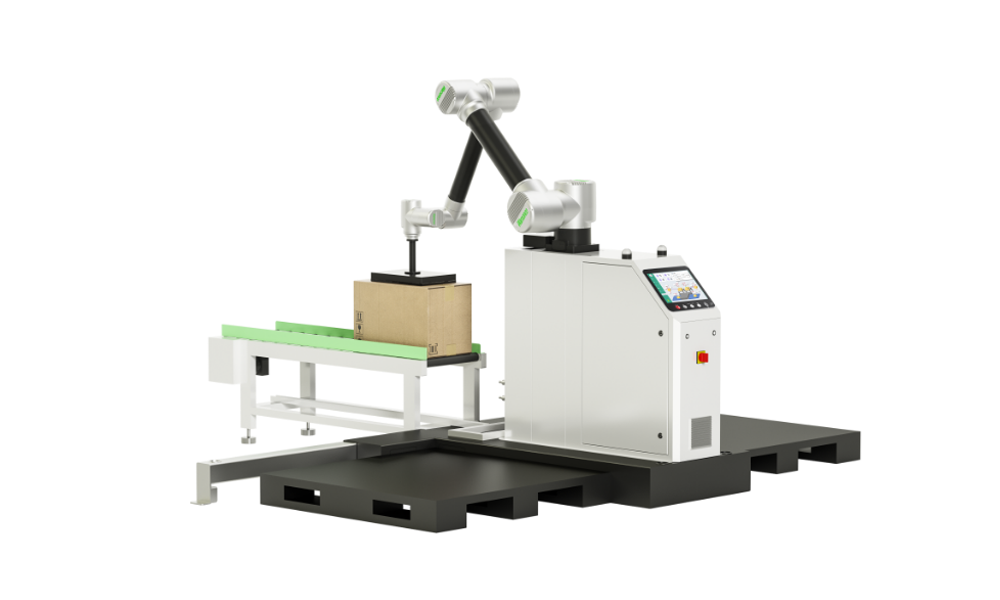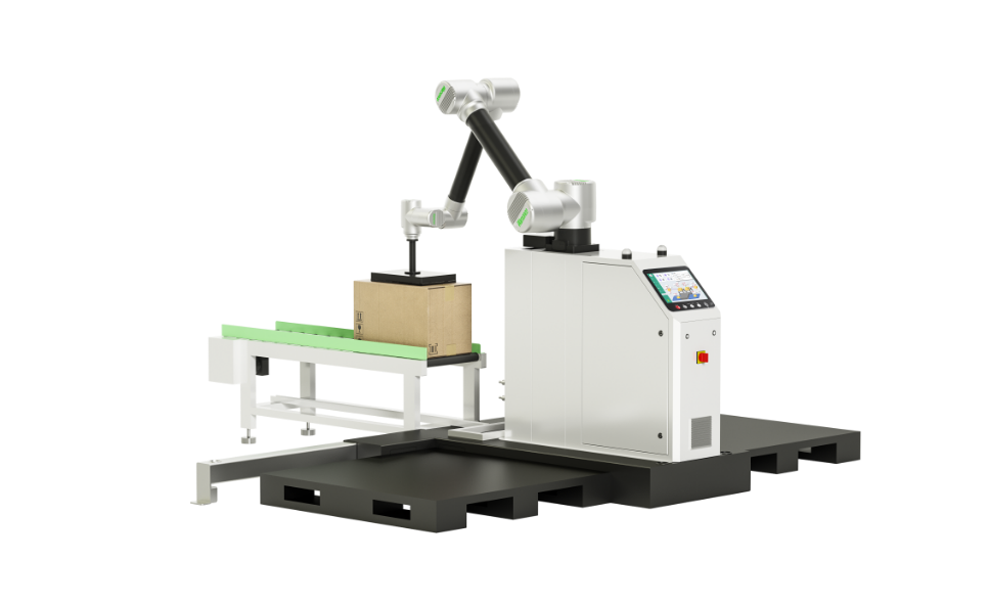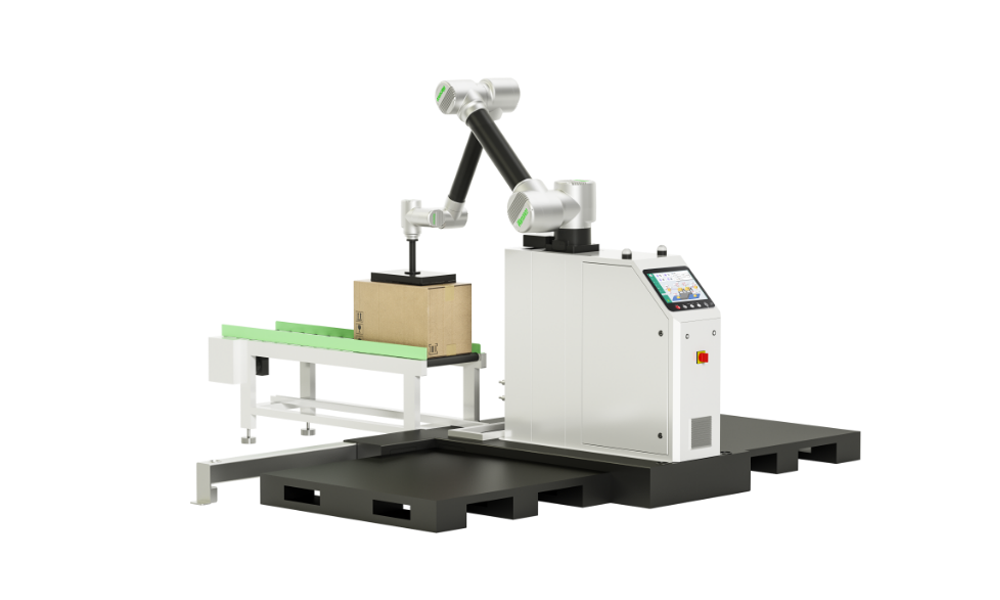


In the process of industrial automation, palletizing robots are gradually emerging as key players. Their technological innovations not only enhance production efficiency but also profoundly reshape the operational models of multiple industries. From food and beverage to electronics manufacturing, from logistics and warehousing to pharmaceuticals and healthcare, palletizing robots are ubiquitous, injecting new vitality into industrial upgrading.
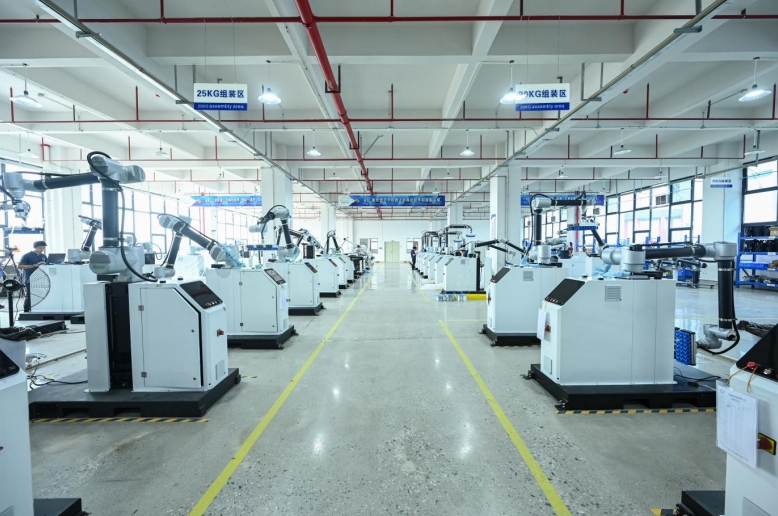
Traditional palletizers often rely on preset programs, lacking flexibility and struggling to meet diversified production needs. With the advancement of technologies such as artificial intelligence and machine learning, modern palletizing robots are evolving toward intelligence and flexibility. For instance, Boevan's intelligent palletizing robots, driven by AI algorithms, can automatically adjust gripping force and palletizing paths based on the real-time status of materials, achieving truly flexible production. This adaptive learning capability enables robots to quickly switch operating modes, aligning with the modern production trend of "multiple varieties and small batches."
In terms of hardware design, palletizing robots are also undergoing continuous innovation. Take Elite's palletizing and handling robot as an example. It adopts a 7-axis heavy-duty robotic arm with a maximum load of 120kg, a repeat positioning accuracy of ±0.1mm, and supports multi-layer three-dimensional palletizing. Meanwhile, equipped with a 3D vision guidance system, it can achieve 0.5mm-level object recognition and automatically compensate for deviations in cargo placement. This high-precision hardware configuration significantly improves the accuracy and stability of palletizing operations.
In addition, the development of human-machine collaboration technology has brought new breakthroughs to palletizing robots. Boevan's collaborative palletizing equipment, through built-in torque sensors in their joints, have upgraded the rigid operation mode of traditional industrial robots to an intelligent closed loop of "perception - decision - execution." When a person accidentally enters the work area, the machine can switch to a compliant mode within 0.3 seconds, greatly enhancing work safety. This human-machine collaboration mode not only improves production efficiency but also reduces restrictions on the workspace.
In the food and beverage industry, the application of palletizing robots is particularly widespread. Due to the particularity of food production, there are high requirements for hygiene standards and production efficiency. In the application of Boevan's CR series robots in Nestle Group, through "plug-and-play" flexibility, automatic boxing of canned coffee and milk powder is realized, with 6 cans grabbed at a time, which is more than 3 times more efficient than manual work. At Cadbury, Boevan's CR5 collaborative robot, together with array cameras and suction cups, forms an intelligent workstation integrated with AI vision technology. It can be quickly deployed to different workstations to efficiently and accurately handle tasks such as candy boxing and palletizing.
In the electronics industry, the high-speed and high-precision operational capabilities of palletizing robots have been fully utilized. Boevan's CR20A collaborative robot, with a joint speed of 223°/s, an accuracy of ±0.05mm, and a cycle time of 8-12 pieces per minute, supports dual-line and double-sided operations, increasing the production efficiency of the production line by more than 3 times. At the same time, a single workstation can handle multiple production lines, meeting the needs of fast-paced and diversified production in the electronics industry.
The logistics and warehousing industry is also an important application field for palletizing robots. In the application of Elite's EC120 palletizing and handling robot in an e-commerce logistics center, a single device can complete the work that a traditional manual palletizing team of 10 people takes 8 hours to finish in only 2 hours, with a palletizing stability of 100%. Through intelligent scheduling algorithms, the robot also supports the collaboration of hundreds of robot clusters, significantly improving the operational efficiency of logistics and warehousing.
In the pharmaceutical industry, the application of palletizing robots effectively avoids pollution risks and error rates caused by manual operations. Boevan's intelligent palletizer creates an unmanned palletizing solution for pharmaceutical companies to ensure the hygiene and safety of the drug production process. Meanwhile, through precise palletizing operations, damage to drug packaging is reduced, and product quality is improved.
Internationally, developed countries such as Europe, America, and Japan started earlier in the technology of palletizing robots and possess advanced core technologies and rich application experience. For example, internationally renowned brands like FANUC and KUKA hold leading positions in the field of high-precision and high-speed palletizing robots. These enterprises focus on technological research, development, and innovation, and continuously launch new products to meet the needs of different industries.
China's palletizing robot industry has developed rapidly in recent years, with some enterprises making significant breakthroughs in technology and applications. For instance, Estun Automation has deeply rooted itself in the field of palletizing robots and successfully created industry benchmark products with a full range of product matrices and independent core technological innovations. Domestic enterprises have certain advantages in terms of price, localized services, and understanding of local market needs, enabling them to quickly respond to customer demands and provide customized solutions.
In the future, palletizing robots will continue to develop toward intelligence, flexibility, and greenization. The application of large AI models will further improve the intelligence level of robots, enabling automatic identification of goods damage and optimization of palletizing strategies. Green technological innovations will enhance the energy efficiency of servo motors, and together with energy recovery systems, reduce the energy consumption of the entire machine. Cloud-based collaborative manufacturing will realize cloud sharing of palletizing data and support synchronous iteration of multi-factory processes.
The technological innovation and industrial application of palletizing robots are profoundly changing the production modes of multiple industries. Whether in improving production efficiency, reducing labor costs, or in enhancing product quality and ensuring production safety, palletizing robots have demonstrated great advantages. With the continuous progress of technology and the in-depth expansion of applications, palletizing robots will play an even more important role in the wave of industrial automation.


 English