

The cost trap of manual sealing lies in continuous expenditures. Taking the express delivery industry as an example, a skilled manual sealer earns a monthly salary of approximately RMB 4,000-6,000. For a medium-sized enterprise with a daily sealing volume of 5,000 cartons, 6 workers are required for shift work, resulting in a single-shift labor cost of RMB 1,800 and an annual labor input exceeding RMB 700,000.
A more easily overlooked cost is consumable waste: manual operation makes it difficult to standardize tape usage, with a waste rate generally ranging from 15% to 20%. Data from an express delivery outlet shows that the annual cost of tape waste alone is nearly RMB 20,000. In addition, management costs such as personnel recruitment, training, and social security, as well as efficiency fluctuation costs caused by employee leave or turnover, further increase the overall expenditure of the manual solution.
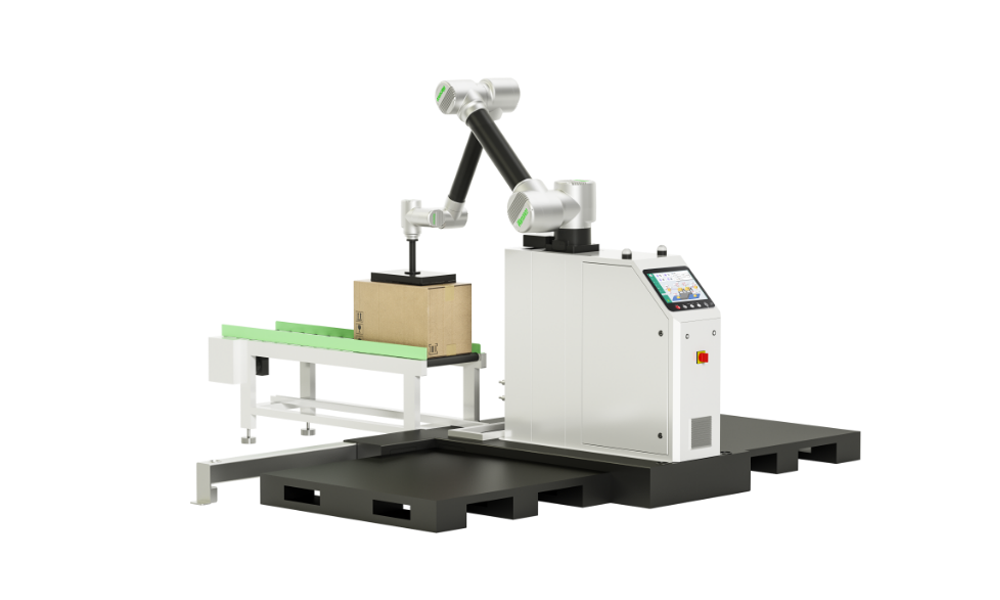
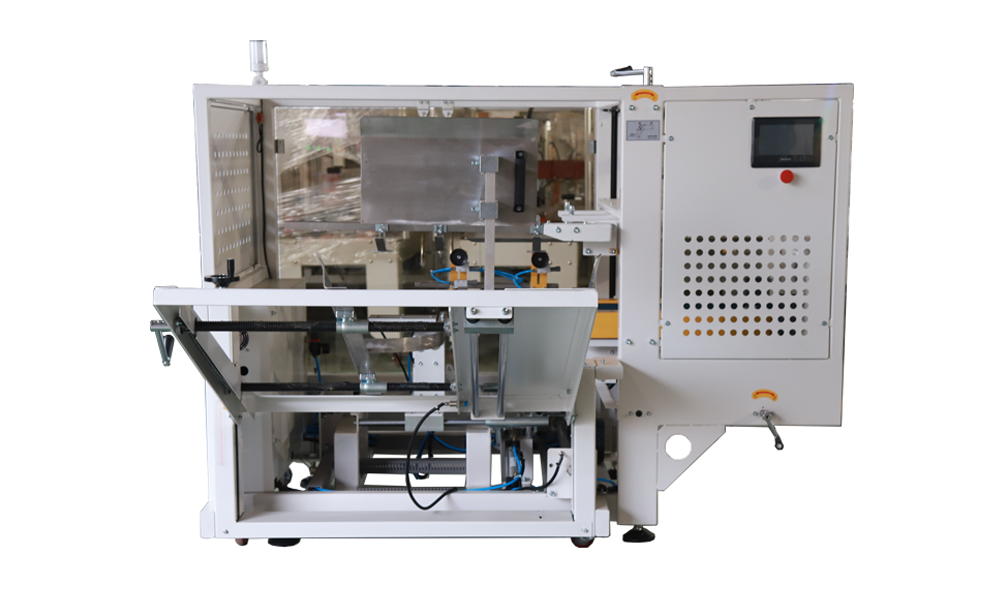
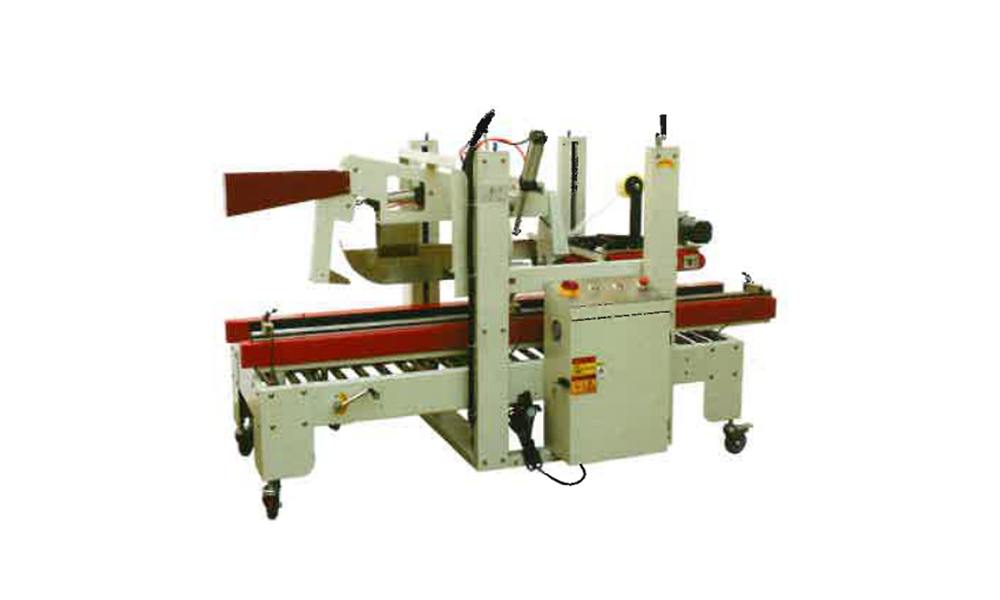
The economic advantage of case sealers lies in the optimized restructuring of cost structure. The purchase cost of a basic automatic case sealer is only RMB 10,000-30,000, and even customized equipment costs no more than several hundred thousand yuan, with a service life of 5-8 years.
The cost advantage becomes more prominent during the operation phase: Maintenance costs are controllable, with annual routine maintenance (including cleaning, lubrication, and replacement of wearing parts) costing approximately RMB 2,000-5,000. Among them, the replacement cost of a single set of wearing parts (such as conveyor belts and cutters) is only RMB 300-800, with a replacement cycle of 6-12 months.
In terms of labor, only 1 worker is needed to supervise one case sealer, reducing the single-shift labor cost to RMB 150 and the annual labor expenditure to less than RMB 50,000. In terms of consumables, the intelligent control system precisely regulates tape tension and length, reducing the waste rate to below 5%. For medium-sized enterprises, the monthly tape consumption decreases from 1,200 rolls to 1,080 rolls.
Taking FedEx Intelligent equipment as an example, for an enterprise with a daily sealing volume of 5,000 cartons, the annual total cost (including equipment depreciation, maintenance, labor, and consumables) can be reduced from RMB 780,000 to RMB 450,000, and the equipment investment can be recovered within 12-18 months.
Manual sealing is inherently limited by physical strength, proficiency, and fatigue, resulting in a natural efficiency ceiling. A skilled worker can seal at most 3-8 standard cartons per minute, and after 4 hours of continuous work, efficiency decreases by more than 30%.
During peak periods such as e-commerce promotions, enterprises need to recruit temporary workers and pay overtime wages. Even so, the hourly sealing volume barely exceeds 800 cartons, often leading to order delays. This "pulsating" efficiency fluctuation further slows down the flow rhythm of the entire packaging line.
Automatic equipment breaks the efficiency bottleneck through mechanical transmission and intelligent control. An ordinary automatic case sealer can handle 15-30 cartons per minute, while high-speed models can reach 50 cartons per minute—3-10 times more efficient than manual operation.
After introducing case sealers, the South China warehouse of SF Express increased its hourly sealing volume from 800 cartons to 5,000 cartons, directly reducing 8 manual workers per shift. More importantly, case sealers can operate continuously for 24 hours with stable efficiency. Enterprises such as FedEx have achieved an 80% increase in packaging efficiency through case sealers, easily coping with peak shipment periods.
Quality fluctuations in manual sealing hide significant risks: problems such as uneven sealing tightness and skewed folding can significantly increase the transportation damage rate. Especially for precision electronics, fresh food, and other products, the loss from a single claim may far exceed the packaging cost.
Case sealers achieve standardized operation through mechanical pressing, with a sealing flatness error of less than 0.5mm and a tape cutting error controlled within ±2mm. Electronic enterprises such as FedEx have met the transportation protection standards for precision components through case sealers, significantly reducing the logistics damage rate.
Case sealers free enterprises from "labor dependence." Equipment operation requires no professional skills, and new employees can take up their posts after short-term training, solving the pain points of "difficulty in recruiting and retaining workers" in the packaging link.
In e-commerce warehouses with high labor turnover, after replacing manual work with case sealers, efficiency fluctuations caused by personnel changes are basically eliminated, and training costs are reduced by more than 40%. At the same time, fewer employees simplify work such as salary calculation and attendance management, allowing enterprises to focus more on core business.
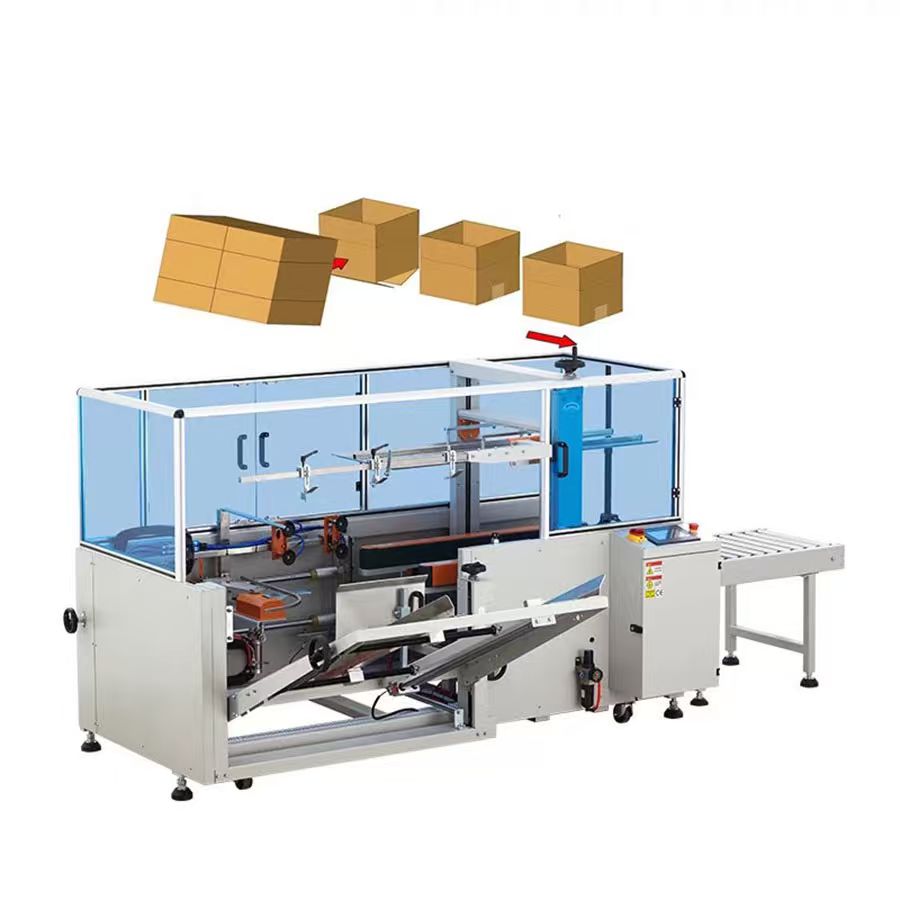
The economic viability of case sealers must be evaluated based on specific scenarios. For enterprises with stable order volumes and a daily sealing volume of over 1,000 cartons, the equipment investment payback period is usually 1-2 years, with significant long-term benefits.
However, as demonstrated by a small enterprise case: if the annual order volume is only 1.5 million cartons and the equipment utilization rate is low during off-seasons, the payback period for customized equipment may be as long as 6.9 years (considering an annual maintenance cost of RMB 3,000), making it economically unviable.
In addition, case sealers have certain site requirements, and special cartons with length/width/height exceeding 800mm may require customization. These factors must be taken into account during decision-making.
The economic advantage of case sealers over manual sealing goes far beyond simple "equipment replacing labor." Through the multi-dimensional value superposition of efficiency improvement, consumable savings, quality stability, and management simplification, it transforms the packaging link from a "cost center" to a "benefit fulcrum."
In today's era where the manufacturing and logistics industries pursue refined management, choosing a suitable case sealer essentially means choosing a quantifiable and predictable path of cost reduction and efficiency improvement—and this is the core competitiveness that automatic equipment brings to enterprises.


 English