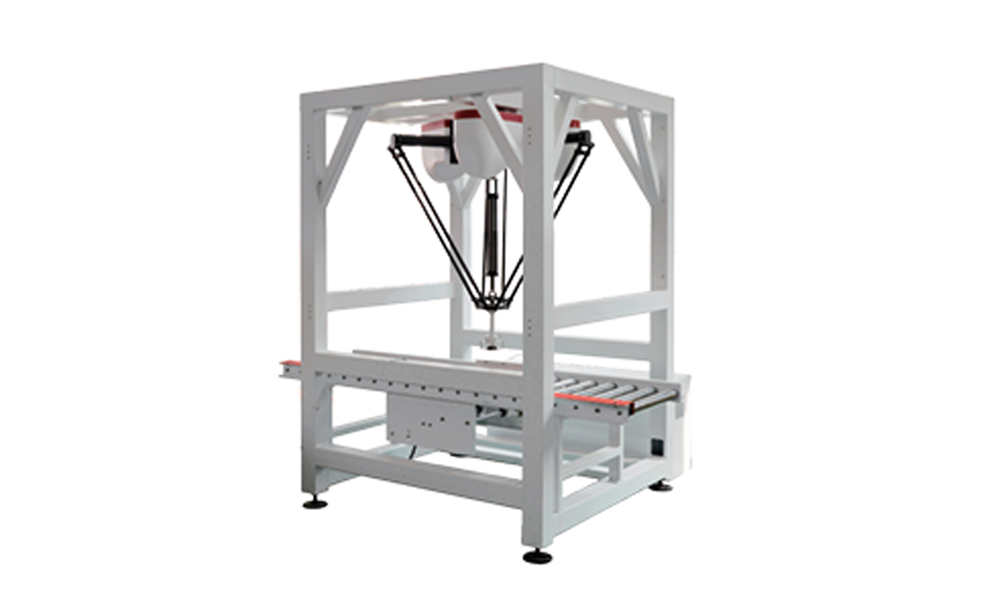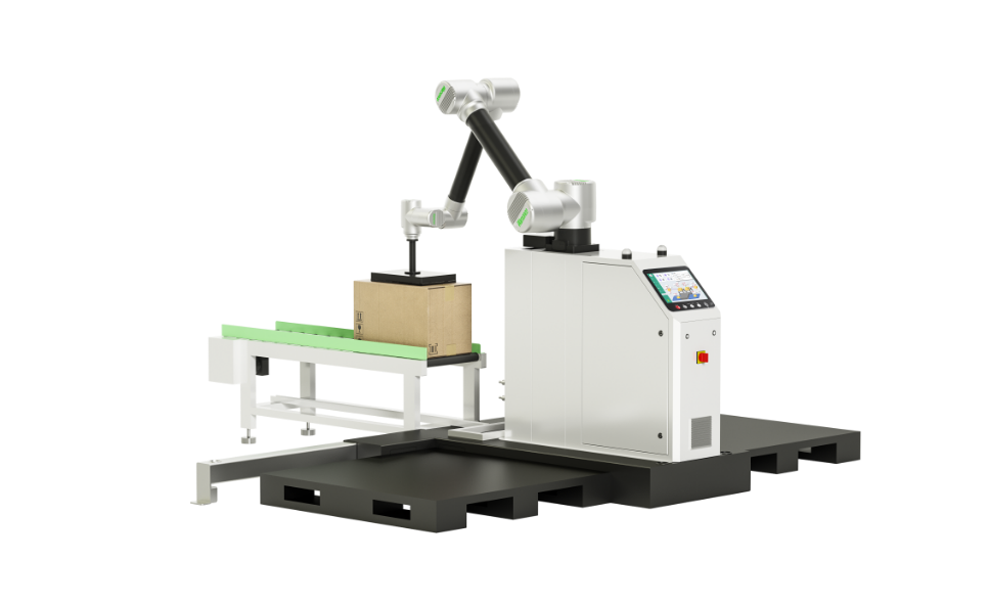


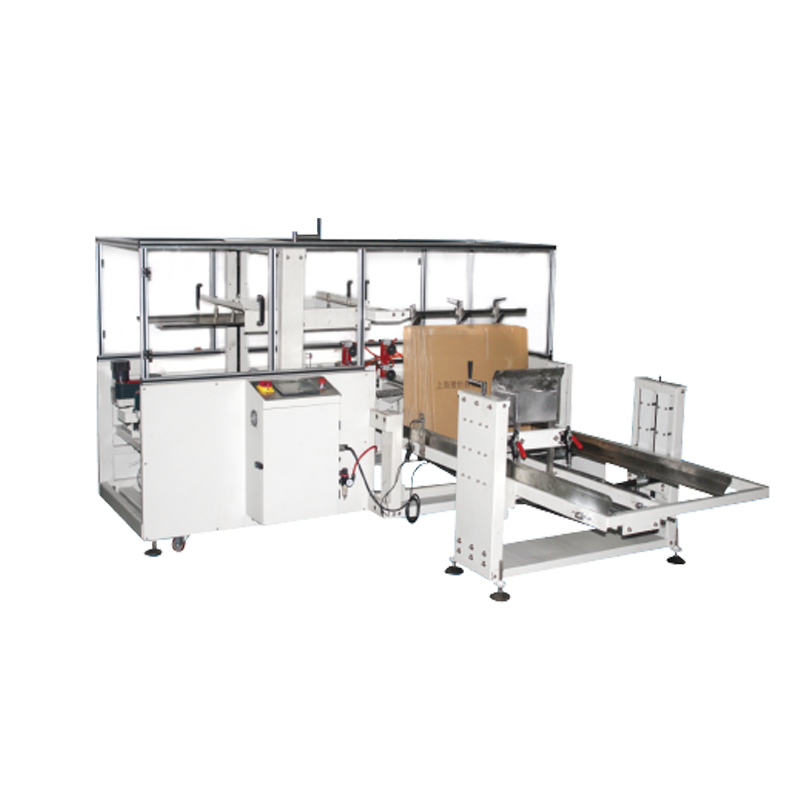
A carton erector (also known as an automatic carton forming and bottom-sealing machine) is a core device that transforms flat carton blanks into 3D cartons for product filling. Through the synergy of mechanical transmission, pneumatic control, and intelligent monitoring, it replaces the tedious manual carton erecting process. In large-scale production sectors such as food, pharmaceuticals, and electronics, it serves as the starting point of packaging lines with the characteristics of "high efficiency, stability, and standardization." A single unit can replace 3-5 manual workers, achieving over 99% consistency in carton forming.
The essence of a carton erector lies in completing the precise transformation of carton shape through the continuous processes of "carton picking, unfolding, bottom folding, bottom sealing, and carton discharging." Each stage is uniformly controlled by a PLC system, with sensors enabling real-time error correction. Its workflow can be visualized as the following 5 steps:
2.1 Automatic Carton Picking: Precise Grasping Without Overlapping
Operation Mechanism: A gravity-fed magazine is used to store flat carton blanks (capacity: typically 50-100 units). Vacuum suction cups driven by a centrifugal fan (airflow: 2000 m³/h, air pressure: 1000 Pa) pick up single carton blanks from the top of the magazine.
Key Guarantee: A separator and a photoelectric sensor (detection distance: 500 mm) work together to ensure only one carton blank is picked each time, preventing overlapping feeding. The carton picking success rate reaches over 99.5%.
2.2 Carton Unfolding: 3D Forming Without Deviation
Operation Mechanism: After the carton blank is picked by the suction cups, it is pulled and unfolded from the "flat folded state" via a robotic arm or fork structure. Guide rails and positioning devices calibrate the carton into a square 3D shape, while an aluminum alloy forming mold (precision: ±0.1 mm) ensures regular carton geometry.
Intelligent Adaptation: Servo-driven models can automatically identify carton specifications (length: 150-506 mm, width: 150-405 mm, height: 102-405 mm) and complete parameter switching within 2-3 minutes.
2.3 Bottom Folding: Press-Fitting Fixation Without Loosening
Operation Mechanism: The bottom flaps of the unfolded carton are flattened by a pressing plate system. A swing-arm folding mechanism sequentially folds the short and long flaps, with positioning devices ensuring a folding error of ≤±1 mm, laying the foundation for the bottom-sealing process.
Force Control: Inverter speed regulation technology (speed range: 0-10 m/min) adjusts the folding force to avoid damage to rigid cartons or deformation of flexible cartons.
2.4 Bottom Sealing & Bonding: Secure Sealing Without Leakage
Mainstream Methods: Two methods are commonly used: tape sealing and hot melt adhesive sealing. For tape sealing, a serrated blade (service life: over 10,000 cycles) is used for cutting, with a flap folding length of 50-70 mm. Hot melt adhesive sealing is compatible with various hot melt adhesive machines, achieving an adhesive strength of 15 N/15 mm.
Precision Guarantee: Labeling and sealing are completed simultaneously, with a labeling precision of ±1 mm. A tape flattening mechanism ensures no air bubbles or edge warping.
2.5 Carton Discharging & Conveying: Stable Connection to Subsequent Processes
Conveying Method: Formed cartons are discharged via a roller conveyor or chain plate conveyor, with the conveying speed matching the subsequent carton packing machine (adjustable: 0.5-2 m/min).
Status Monitoring: A sensor at the discharge port detects the integrity of cartons, and defective products are automatically rejected, ensuring a 100% qualification rate for cartons entering the next process.
The stable operation of a carton erector relies on the precise coordination of core components. Below are the key parameters and performance indicators of mainstream equipment:
Component Category | Core Parameters | Performance |
Power System | Motor power: 1.5-2.5 kW, inverter speed regulation | Supports stepless speed adjustment of 0-10 m/min, energy consumption ratio: ≤0.8 kWh/1000 cartons |
Suction System | Centrifugal fan airflow: 2000 m³/h, air pressure: 1000 Pa | Suction cup success rate: ≥99.5%, compatible with 200-500 g/㎡ cardboard |
Sealing System | Tape width: 4.8-7.2 cm, blade service life: 10,000 cycles | Sealing speed: 10-40 cartons/minute, no tape skipping |
Control System | PLC + Kunlun Tongtai TPC7062KS HMI | Fault diagnosis accuracy: ≥95%, supports remote monitoring |
Structural Components | Transmission gear hardness: HRC 58-62, coating thickness: 80 μm | Equipment mean time between failures (MTBF): ≥8000 hours |
4.1 Typical Application Fields
Food & Beverage Industry: Adapted to high-speed production lines. For example, breweries use horizontal carton erectors with a speed of 40 cartons/minute, which work with carton packers to achieve a daily output of 100,000 cartons.
Pharmaceutical Industry: Models with stainless steel bodies and dust-proof designs are selected to meet GMP certification requirements, and sealing precision ensures the sterility of pharmaceutical packaging.
E-Commerce Industry: Multi-specification adaptive models are adopted, which can complete carton size switching within 2 minutes to meet the diverse needs of express packaging.
4.2 Core Selection Indicators
Capacity Matching: Low-speed models (10-12 cartons/minute) are suitable for small-to-medium batch production, while high-speed models (25-40 cartons/minute) are used in large-scale production lines.
Carton Compatibility: Confirm the range of carton sizes compatible with the equipment; prioritize servo-driven multi-specification models.
Environmental Requirements: For the food and pharmaceutical industries, hot melt adhesive sealing models are preferred; for the e-commerce industry, models compatible with degradable tapes can be selected.
1.Pre-Startup Self-Inspection: Before startup, confirm the air pressure (0.4-0.6 MPa) and voltage (380 V or 220 V), and preheat the equipment for 1-2 minutes.
2.Daily Maintenance: Clean residual paper scraps from the suction cups daily, lubricate the transmission gears weekly, and calibrate the sensitivity of the photoelectric sensor monthly.
3.Troubleshooting: If carton picking fails, first check the airtightness of the suction cups and the air pressure of the fan; if sealing is skewed, adjust the guide rail spacing (3-5 mm wider than the carton).


 English