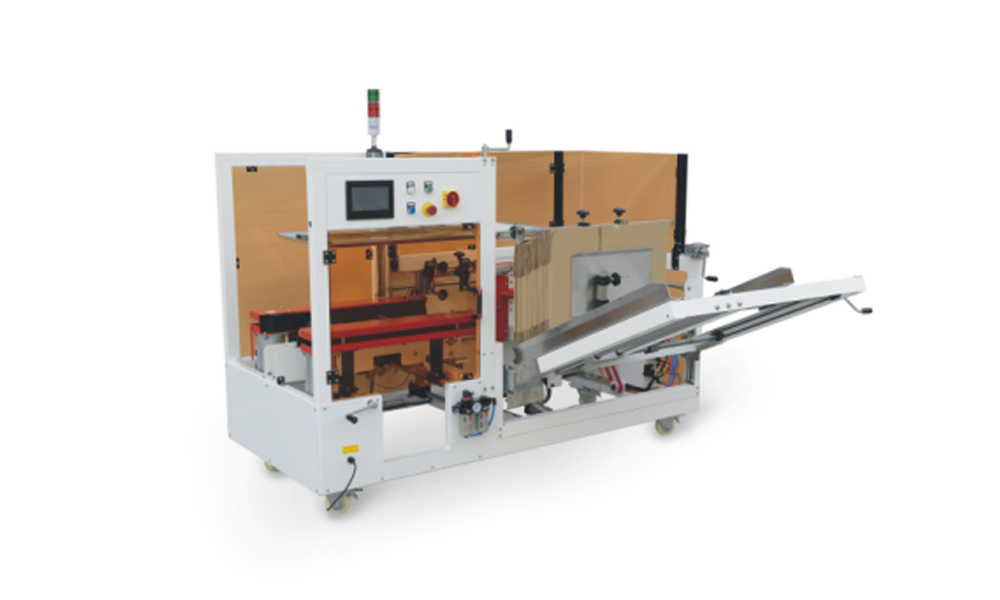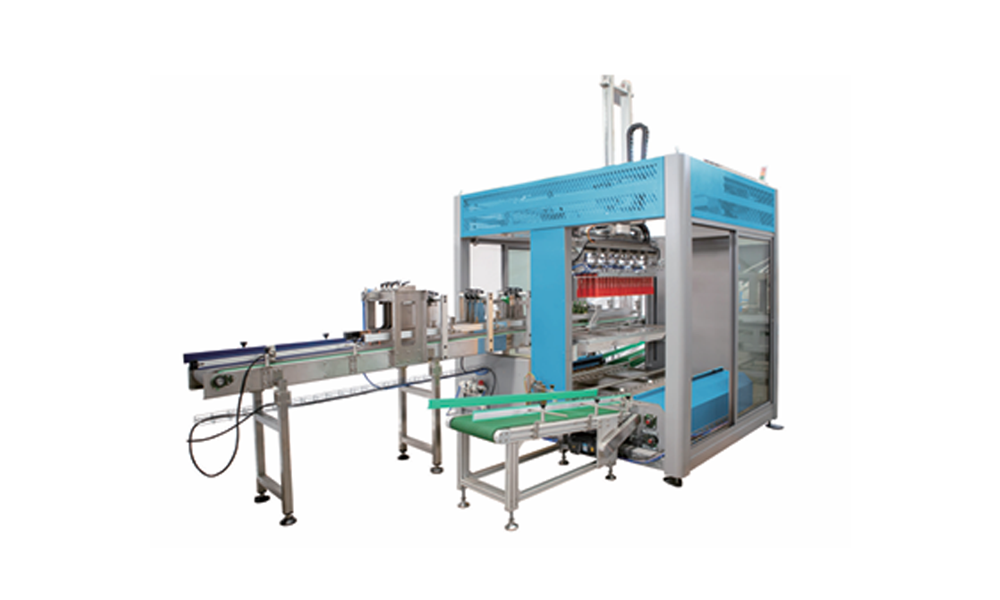


Choosing the right case palletizer has quietly become one of the highest-stakes decisions on the modern factory floor. Production managers and engineers are caught between two fundamentally different philosophies: invest in a conventional layer palletizer—proven, fast, and optimized for stable high-volume runs—or deploy a flexible box packing robot that adapts to mixed SKUs, frequent pattern changes, and tighter floor space without sacrificing throughput reliability.
The pain point is real. SKU counts are climbing. Retail customers demand mixed-pallet orders. Changeover windows are shrinking. And floor space in most facilities was never designed with end-of-line automation in mind. Buyers who choose the wrong architecture today either over-engineer a rigid system that can't flex, or under-specify a robotic cell that can't keep pace at peak demand.
This guide explains exactly how each system works, which specifications actually drive performance, where each technology wins, how to size and integrate either option, and what the true lifecycle cost looks like—so you can walk into a supplier conversation with the right questions and leave with the right system.
Understanding the working principle of each system is the fastest way to filter which architecture fits your line before you ever talk to a vendor.
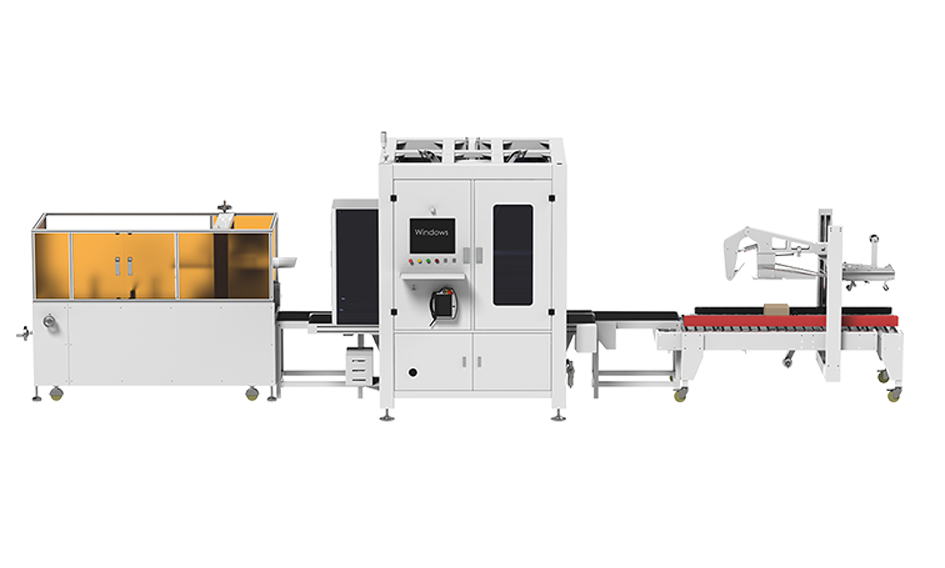
A robotic case palletizer centers on an industrial robot arm—typically a 4-axis or 6-axis unit—paired with an end-of-arm tool (EOAT) engineered for the specific case type. The robot picks individual cases or small groups from an infeed conveyor and places them onto a pallet according to a pre-programmed stacking pattern stored as a software recipe.
Vacuum cup arrays handle smooth corrugated surfaces; servo clamp grippers manage unstable or perforated cases. The EOAT is the single most important mechanical component—it determines cycle time, case damage rate, and changeover speed. Every pallet pattern, case orientation, and layer height is stored digitally, so switching from SKU A to SKU B is a recipe selection on the HMI with no physical tooling swap required. A single robot arm can also serve two pallet positions simultaneously, building different patterns on each—a critical advantage for co-packing and e-commerce fulfillment environments.
A conventional case palletizer builds complete layers before transferring them to the pallet stack. Cases arrive on an infeed conveyor, are arranged into a full layer using row formers, 90° turning stations, and pusher mechanisms, then the completed layer is swept or lowered onto the pallet.
Because the system moves an entire layer in one motion, conventional layer palletizers can achieve significantly higher cases-per-minute rates—often 80–150+ CPM—when the case format is stable. The trade-off is changeover: switching case formats requires physical adjustment of guides, pushers, and layer-forming components, typically 30–90 minutes of skilled maintenance time.
Before requesting quotes, align your team on these four variables:
| Variable | Robotic Box Packing Robot | Conventional Layer Palletizer |
|---|---|---|
| Footprint | Compact modular cell | Larger mechanical footprint |
| SKU changeover | Software recipe (minutes) | Mechanical adjustment (30–90 min) |
| Peak throughput | Moderate–high (30–80 CPM typical) | High–very high (80–150+ CPM) |
| Format flexibility | Excellent | Limited |
Specifications on a datasheet rarely tell the full story. Here are the parameters that actually determine whether a case palletizer or box packing robot cell will perform as expected once running in your facility.
Always clarify whether the quoted CPM is sustained average or theoretical peak. A robotic cell rated at 20 CPM sustained may be perfectly adequate if your upstream line runs at 18 CPM—but inadequate if your line surges to 28 CPM during shift peaks. For higher throughput requirements, dual-lane infeed allows the robot to pick from two streams simultaneously, effectively doubling available CPM without requiring a faster robot.
On payload, most robotic palletizing arms handle 5–50 kg per pick comfortably. Heavier cases require larger robot models and more robust EOAT structures. Wet, greasy, or perforated corrugated surfaces reduce vacuum cup effectiveness—specify surface conditions explicitly so your supplier can select the correct EOAT. If your pallet patterns require slip sheets between layers, confirm whether the EOAT or a dedicated dispenser handles insertion and how this affects cycle time.
Automatic pallet dispensers eliminate manual pallet placement and improve cycle consistency. Specify pallet type (wood, plastic, Euro, GMA) and condition because worn pallets can jam dispensers. Confirm full pallet discharge direction relative to your facility layout before finalizing the cell footprint, and plan the conveyor connection to any downstream stretch wrapper at the layout stage—retrofitting this connection is expensive.
On safety and controls, hard guarding (fencing) is the most cost-effective option. Safety laser scanners allow semi-collaborative operation where operators need frequent cell access. Confirm communication protocol compatibility with your existing line PLC (EtherNet/IP, PROFINET, Modbus TCP) before purchase, and verify that the HMI allows operators to select and save pallet recipes without engineering support.
Neither technology is universally superior. The right answer depends on your production reality.
A robotic cell delivers its strongest ROI when SKU counts are high and changeovers are frequent. Software recipe changeovers eliminate the mechanical adjustment time that kills productivity on conventional systems—each switch takes minutes, not hours. This advantage compounds in co-packing and contract manufacturing environments where a single cell may store hundreds of customer-specific pallet recipes and switch between them at the HMI.
Limited floor space is another strong signal toward a robotic cell. A typical robotic cell footprint can be 30–50% smaller than an equivalent-throughput conventional layer palletizer. And because a robotic cell can be designed with a second pallet position from day one—or upgraded to add one later—it protects capital investment as your line grows.
If your line runs a single case format at 100+ CPM and uptime is the only metric that matters, a conventional layer palletizer's mechanical throughput ceiling is genuinely higher than most robotic alternatives at equivalent cost. Beverage, commodity food, and bulk chemical operations that run the same case format for weeks or months at a time rarely need the flexibility premium of a robotic system.
| Industry | Robotic Box Packing Robot | Conventional Layer Palletizer |
|---|---|---|
| Food & beverage (high-mix) | ✓ Primary choice | Secondary |
| Food & beverage (single SKU, high volume) | Secondary | ✓ Primary choice |
| Home and personal care | ✓ Primary choice | Situational |
| Pharmaceuticals and nutraceuticals | ✓ Primary choice | Rare |
| E-commerce fulfillment | ✓ Primary choice | Not recommended |
| Chemicals (case-ready) | Situational | ✓ Primary choice |
| Co-packing / contract manufacturing | ✓ Primary choice | Not recommended |
A structured selection process prevents the two most common and expensive mistakes: over-specifying a system that costs more than your ROI justifies, and under-specifying a system that becomes a bottleneck within 18 months.
Send this to your engineering team and supplier before requesting a quote:
Case dimensions (L×W×H) and weight range across all SKUs, including surface condition and box compression limits
Target CPM (sustained average and peak), shift pattern (hours/day, days/week), and upstream line speed variability
Pallet type and size, maximum pallet height, required stacking patterns, and slip sheet or interlayer requirements
Available floor area (L×W), ceiling height, required maintenance access lanes, and infeed conveyor entry direction and height
Current bottleneck: labor shortage, unstable stacking, changeover time, or line stoppages—quantify the cost of each
Plan for a minimum of 2–3 minutes of accumulation capacity between your production line and the case palletizer to absorb pallet change cycles without stopping the upstream line. Specify where rejected cases exit the system before reaching the palletizer—cases that reach the robot or layer former cause jams and unplanned stoppages.
Confirm available voltage, phase, amperage, and compressed air supply at the installation point. Both system types require anchored, level floors—verify floor load capacity before finalizing the layout. Budget for operator training on HMI and recipe management, maintenance training on EOAT inspection and robot greasing intervals, and a documented troubleshooting guide for the most common fault conditions.
Purchase price is rarely the largest number in a case palletizer investment. TCO over a 7–10 year lifecycle often tells a very different story.
A robotic box packing robot cell has fewer mechanical stations than a conventional layer palletizer, which generally means fewer adjustment points and a lower frequency of mechanical failures. Routine tasks include EOAT wear part inspection (vacuum cups and gripper pads, typically every 500–1,000 operating hours), robot greasing at manufacturer-specified intervals (3,000–10,000 hours depending on axis and load), and periodic sensor and vision system cleaning.
A conventional layer palletizer has significantly more moving mechanical assemblies—row formers, pushers, layer plates, transfer mechanisms—each representing a potential failure point. Mechanical guides and pushers wear and drift over time, requiring periodic realignment especially after case format changes.
This is where the robotic cell often wins decisively in high-mix environments. A recipe changeover takes 2–5 minutes at the HMI with no mechanical adjustment required. A conventional mechanical changeover takes 30–90 minutes. At 20 changeovers per week, that gap represents 10–30 hours of lost production time weekly—a number that compounds dramatically over a year.
Build your TCO model using these variables before you buy:
| TCO Driver | How to Quantify |
|---|---|
| Labor saved per shift | Current palletizing headcount × fully-loaded labor cost × shifts/year |
| Changeover time saved | Changeovers/week × minutes saved × production value per minute |
| Case damage reduction | Current damaged cases/week × case value + rework labor |
| Unplanned stoppage reduction | Current downtime hours/year × line output value per hour |
| Expansion flexibility | Cost of adding a second pallet position vs. buying a second system |
| Maintenance parts and labor | Annual parts cost + maintenance labor hours × technician rate |
The right case palletizer decision comes down to an honest assessment of your production reality.
If your line runs a single case format at consistently high speed with minimal changeovers and adequate floor space, a conventional layer palletizer may deliver the lowest cost per case over its lifecycle.
If you are managing multiple SKUs, frequent pattern changes, limited floor space, labor pressure, or plans to expand line capacity, a robotic box packing robot solution is almost always the safer long-term investment. It protects flexibility, reduces changeover losses, and scales with your business without requiring a full system replacement when your product mix evolves. When evaluating packaging machinery suppliers, choosing a partner with strong integration experience is essential for long-term automation success.
1. What is a case palletizer?
A case palletizer is an automated system that stacks cases or cartons onto pallets in defined patterns for storage and shipping. It replaces manual palletizing labor while improving stack consistency, load stability, and end-of-line throughput.
2. What is the real difference between robotic palletizing and conventional layer palletizing?
A conventional layer palletizer forms and transfers complete layers mechanically—fast for stable single-format lines, but changeovers take 30–90 minutes of physical adjustment. A robotic box packing robot places cases individually via software recipes, switching SKUs in minutes with no mechanical retooling. The trade-off: conventional systems reach higher peak CPM; robotic cells win on flexibility and mixed-SKU environments.
3. What ROI and payback period can I realistically expect?
Most operations recover investment in 18–36 months. Primary drivers are labor savings per shift, reduced case damage and rework, higher line uptime, and faster changeovers. Payback is fastest when you currently palletize manually or lose significant production time to frequent SKU switches. Submit your current costs on the box packing robot page for a tailored estimate.
4. Do I need to significantly modify my production line to add a case palletizer?
Typically no major rebuild is required. Standard integration involves infeed conveyor alignment, upstream accumulation, pallet supply and discharge paths, safety guarding, and PLC signal connections. A drawing review with your supplier before purchase identifies any additional requirements early. Learn more on the case palletizer product page.
5. What parameters should I provide to get an accurate selection and quotation?
Submit these details on the box packing robot page:
Case L×W×H, weight range, and surface condition across all SKUs
Target CPM (sustained average and peak) and shift pattern
Pallet type, size, max height, stacking patterns, and slip sheet needs
Available footprint (L×W) and ceiling height
Current pain point: labor cost, changeover time, unstable stacks, or downtime


 English