

As a type of automated logistics equipment, palletizers rely primarily on robotic and automatic control technologies to perform the palletizing process. The operation typically begins with the identification of goods. Using high-resolution cameras and advanced image processing algorithms in a vision system, the Boevan palletizer can quickly and accurately detect the shape, size, color, and orientation of items. Alternatively, laser sensors can determine distance and position by emitting and receiving laser signals and measuring their round-trip time, providing critical data for subsequent operations.
During the handling phase, the palletizer follows a pre-programmed path. For robotic arm palletizers, the arm—composed of multiple joints driven by servo motors—moves precisely through three-dimensional space under the control of the system. This enables accurate transport of items from the pick-up point to the stacking position. Conveyor-belt-type palletizers, on the other hand, use motor-driven belts. By adjusting the belt's speed and using diverters and direction control devices, goods are conveyed and positioned as needed.
In the stacking phase, the palletizer arranges items neatly based on their shape, size, and weight, following a pre-set stacking pattern. For regular-shaped cartons, common arrangements include "brick" and "cross" patterns. The palletizer precisely controls the sequence and placement of the gripping device to ensure the stability and aesthetic of the stacked goods, meeting the demands of storage and transport.
Sensors: Data Collection Tools
Sensors are crucial for detecting environmental and item-related data and transmitting it as electrical signals to the control system. Laser sensors use distance-measuring principles to determine how far goods are from the palletizer. Ultrasonic sensors detect item presence and location using sound waves, and are effective in short-range detection and obstacle avoidance. Photoelectric sensors detect object movement through light emission and reception, ideal for monitoring if goods have reached specific points. Force sensors installed on the grippers measure gripping force in real-time, preventing item damage from excessive force or slippage due to insufficient grip, ensuring stable handling of goods with varying weights and materials.
Vision System: Eyes for Positioning and Recognition
The vision system is essential for precise object recognition and localization. The process begins with image capture using high-resolution cameras. Images are then enhanced through denoising and grayscale conversion. During feature extraction, algorithms such as edge detection and shape matching analyze characteristics like shape, size, and color. In the final recognition phase, pattern matching determines object type and location. Vision systems are particularly effective in complex environments, such as identifying mixed or partially obscured goods, providing critical support for accurate robotic navigation and operation.
Execution Mechanism: Physical Operation Units
The execution mechanism includes components like grippers, suction cups, and movement systems. Grippers are suitable for rigid, regularly shaped goods, with adjustable force for secure handling. Suction cups are ideal for flat, lightweight items like cartons or film-wrapped products, utilizing vacuum technology. Special suction designs exist for porous or uneven items. Movement systems—robotic arms or guide rails—transport items through three-dimensional space to their stacking position. These systems must be precisely designed and adaptable to handle items of varying sizes, shapes, and weights.
Control System: The Operational Brain
The control system orchestrates the coordination of all technical components. It processes input from the vision system and sensors, executing high-precision algorithms to control the robot’s movements and operations. For instance, it calculates the optimal motion parameters for smooth and rapid arm movement and plans paths that avoid obstacles while maximizing efficiency. To maintain performance in high-speed or high-load environments, control systems often use advanced digital signal processing and control technologies to ensure precise, real-time regulation.
Software: Functional Integration Platform
Software serves as the platform for managing and integrating all subsystem data. With an intuitive user interface, operators can easily set parameters such as palletizing modes, gripping force, and movement speeds. Users can also schedule tasks, define stacking sequences, and monitor real-time operational status and fault alerts. Software platforms are highly customizable and can be integrated with production and warehouse management systems to achieve complete automation and information integration.
Vertical Palletizer
Compact in design and requiring minimal floor space, vertical palletizers include a column, lifting mechanism, fork system, and control unit. The lifting mechanism, powered by a motor and lead screw or chain, adjusts the height of the fork. The fork system then moves horizontally via a gear rack or telescopic cylinder to place goods at the desired position. This type is simple and user-friendly, making it ideal for small packages in industries like food and electronics.
Horizontal Palletizer
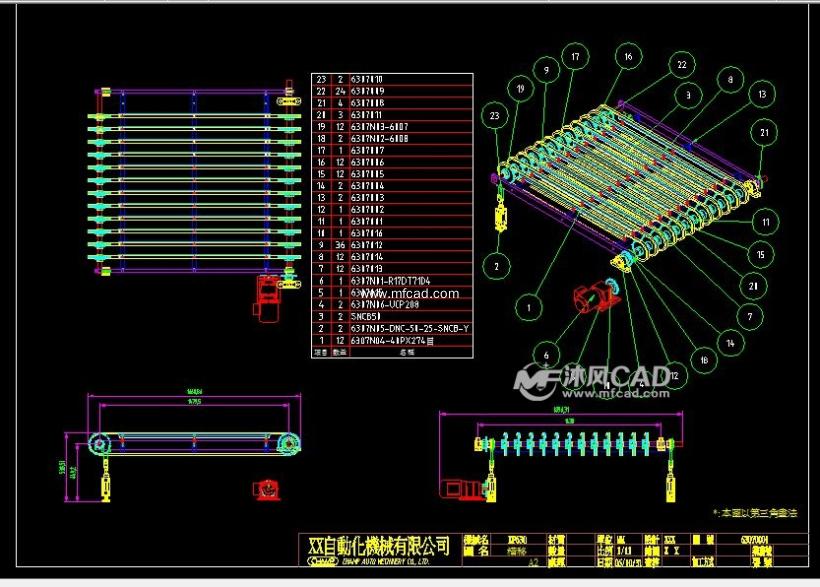
Designed for large items, horizontal palletizers consist of a frame, conveyor belt, lifting mechanism, fork system, and control unit. The conveyor belt delivers goods to the fork system, which is raised using hydraulic or electric actuators. The goods are then transferred laterally to the stacking point. While its operation is more complex, it offers excellent efficiency and stability, making it suitable for heavy items like building materials and chemicals.
Gantry-Type Palletizer
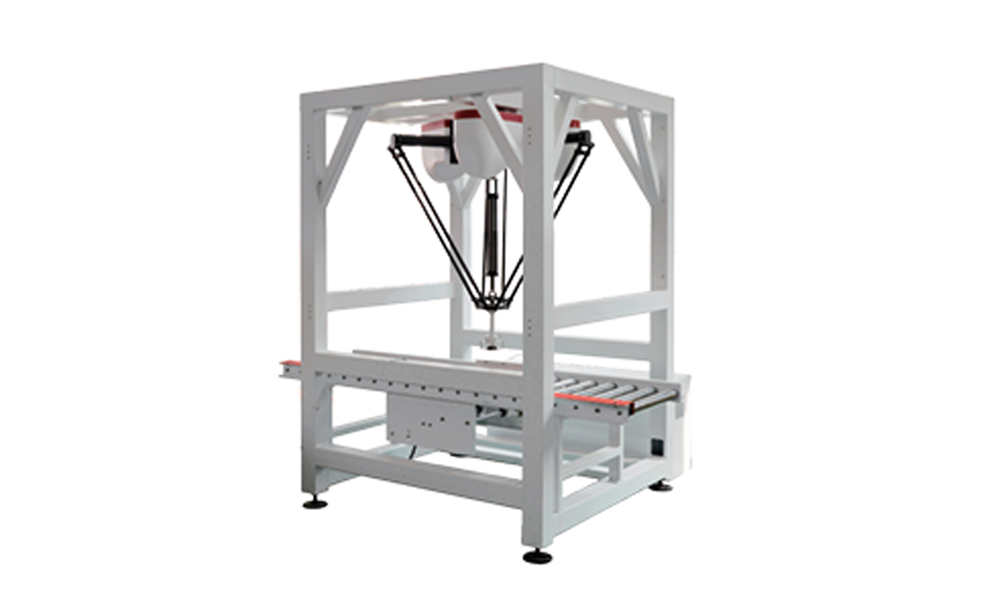
Featuring a gantry structure, these palletizers can handle a wide range of product shapes and sizes. Vertical motion is achieved through motorized guide rail sliders, while horizontal movement is motor-driven. The system offers high flexibility and can adapt its parameters and path based on the workspace and item requirements, making it ideal for dynamic environments like logistics warehouses.
Articulated Robotic Palletizer (Anthropomorphic Arm)
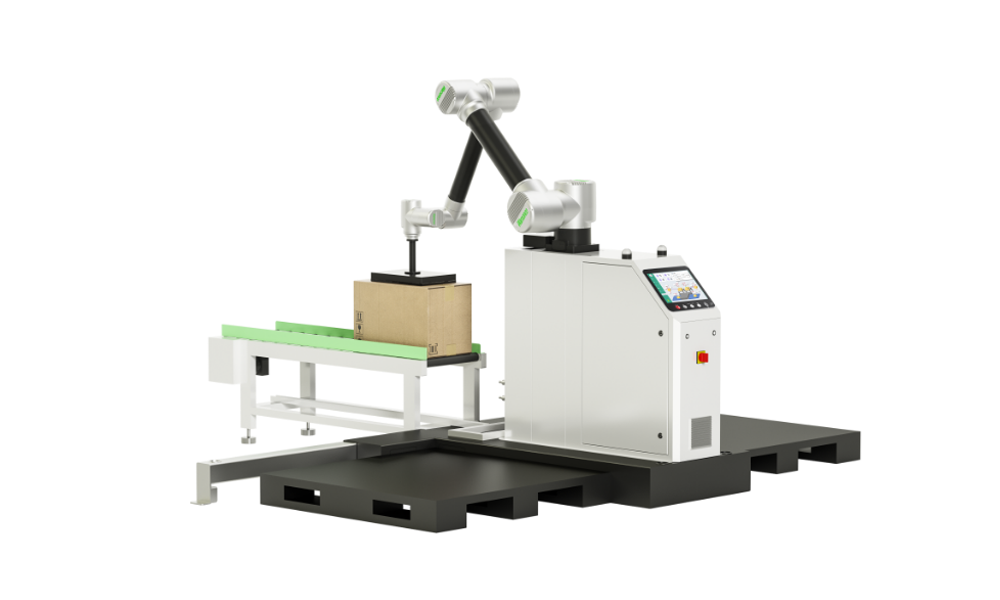
Mimicking the structure of a human arm, this type consists of a multi-jointed robotic arm and an end effector, equipped with advanced controls and sensors. Each joint, driven by a servo motor, allows for agile, three-dimensional movement. Visual and force sensors provide real-time feedback, enabling precise and adaptable handling. This high-flexibility model is widely used in industries like electronics and pharmaceuticals that demand precision and adaptability.
Food and Beverage Industry
Palletizers are essential in beverage lines where vacuum suction cups pick up bottles and stack them according to set patterns, processing thousands of bottles per hour. This boosts productivity while reducing contamination risks. For bagged snacks, adjustable grippers manage various sizes and weights, ensuring consistent stacking and adapting to different packaging formats.
Pharmaceutical Industry
Pharmaceutical palletizers must meet stringent hygiene and accuracy standards. They can handle medicine boxes and glass bottles, using vision systems for precise batch verification and force sensors to prevent breakage. These systems reduce contamination risks and align with strict regulatory requirements.
Logistics Industry
In logistics, palletizers are used for warehousing, sorting, and shipping. Vision and laser sensors identify and locate goods, which are then sorted and stacked by criteria like size and weight. During peak e-commerce periods, palletizers operate continuously, enhancing storage efficiency and automating order fulfillment through seamless integration with sorting systems.
Building Materials Industry
For bulky and heavy items like tiles or cement bags, palletizers use suction cups or grippers to handle materials efficiently and safely. In cement plants, automated palletizing reduces manual labor, improves stacking speed, and minimizes product damage and dust, contributing to a cleaner, safer work environment.
Electronics Industry
Palletizers handle small, precise components and packaging. In phone manufacturing, vision systems distinguish subtle packaging differences, while delicate grippers manage lightweight boxes. For tiny components, advanced force control ensures careful handling, supporting the high-precision demands of electronics manufacturing.
With ongoing technological advancements, palletizers offer unmatched efficiency, precision, and flexibility across industries. As innovation continues, their application scope will expand, playing a vital role in advancing industrial automation and intelligent manufacturing.


 English